
Alpine soils storing up to a third less carbon as summers warm
Crucial role
Soils play a crucial role in the global carbon cycle. The figure below, from a News & Views article that accompanies the paper, illustrates how carbon is taken up and released by soils. Plants absorb CO2 from the atmosphere through photosynthesis, and transfer carbon into the ground when dead roots and leaves decompose in the soil. Here, carbon is “immobilised” for anything from a week to thousands of years. Eventually, the carbon is broken down completely, or “mineralized”, releasing CO2 back into the atmosphere.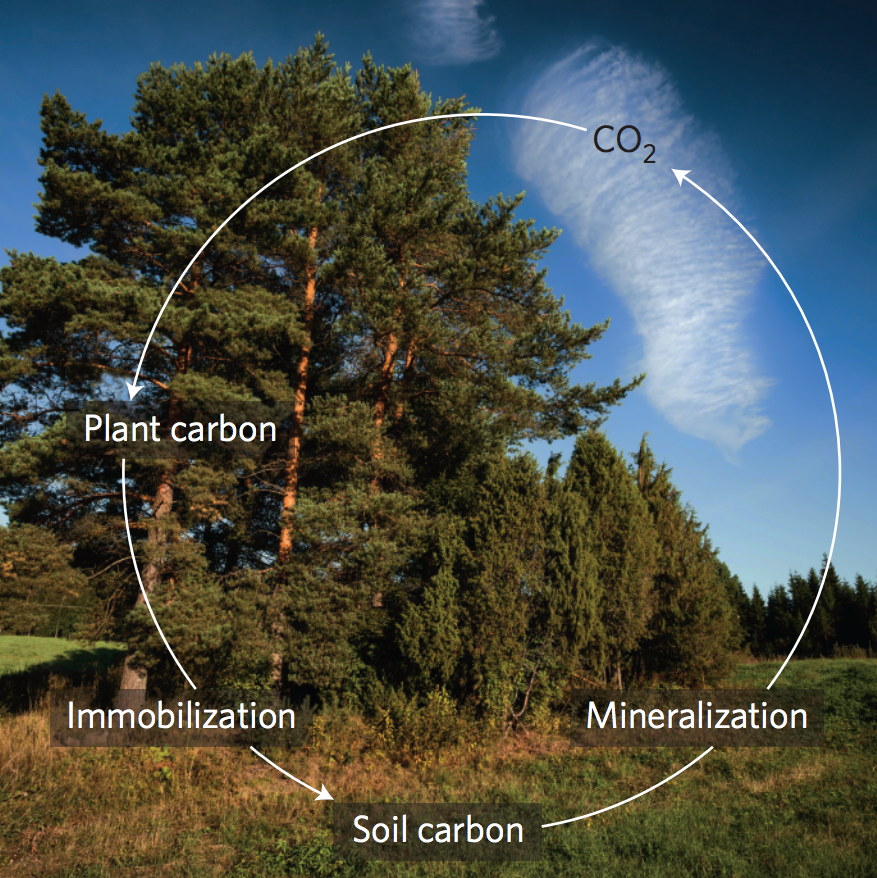
Warming summers
So, what role do rising temperatures play in the decline of soil carbon in the Alps? Warmer conditions can speed up the turnover of carbon through the soil. Microbes in soils that break down organic carbon work harder in warmer temperatures, releasing more carbon, Prietze explains to Carbon Brief:“In many soils under a temperate humid climate, an increase of air temperature results in increased microbial soil organic carbon decomposition rates.”
Overall, as conditions in the Alps get warmer, more carbon is lost from the soil than is added back in from dead plants, the paper explains.
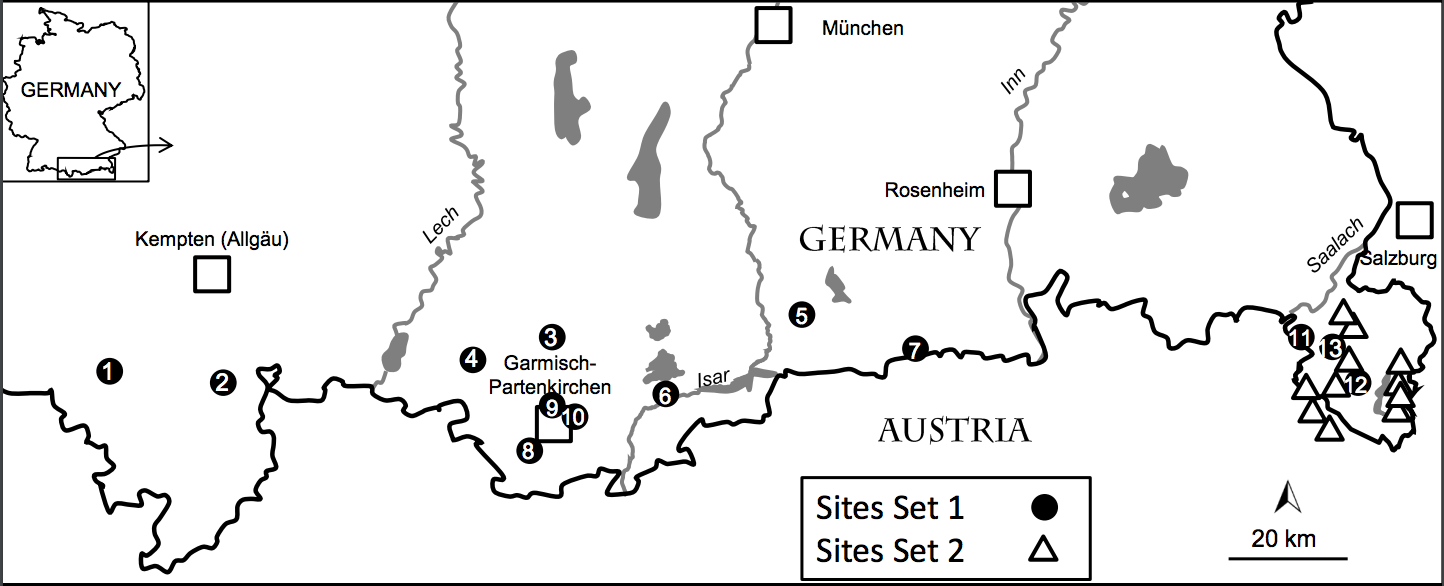
Average temperatures between May and October across Set 1 of the sample locations (see earlier map) have increased by 0.5C per decade over the last 25 years, the study says. The equivalent temperature change for Set 2 is 0.3C per decade, but this warming isn’t statistically significant. This means the scientists can’t be certain that the warming hasn’t happened by chance.
The results suggest that forest soils in the German Alps have changed from a net sink of carbon to a net source, says Prietze. This means the soils are now releasing more carbon to the atmosphere than they are taking up.
Prof Guy Kirk, professor of soil systems at Cranfield University and author of the News & Views article, writes that the findings of this “exemplary” monitoring study might be a sign of how soils could amplify warming in future, perhaps triggering a self-reinforcing loop. He writes:
“[The study’s] evidence that climate change has already started depleting soil carbon in the German Alps raises the possibility that a positive feedback between climate and ecosystems is beginning.“
This positive feedback would see warming conditions speed up the release of carbon from the world’s soils, which would in turn warm the climate further.
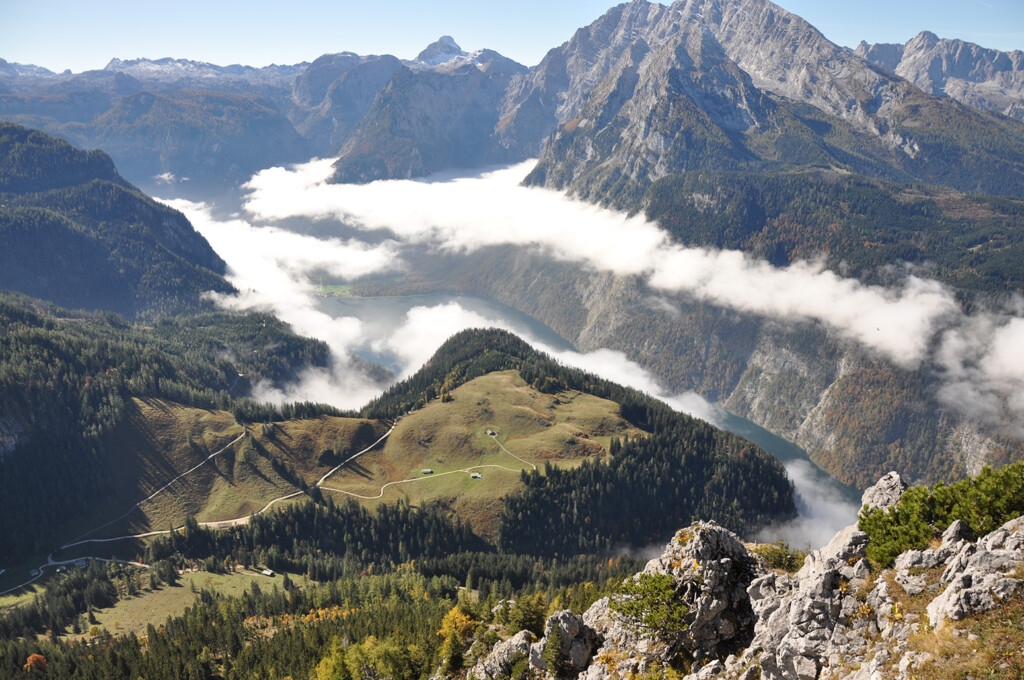
Main image: View from Mt Jenner on to the Königssee. Credit: cc0.photo.
Article information
Prietzel, J. et al. (2016) Organic matter losses of German Alps forest soils since the 1970s likely caused by warming, Nature Geoscience, doi:10.1038/ngeo2732 & Kirk, G. (2016) Carbon losses in the Alps, Nature Geoscience.