
Shifting global cloud patterns could amplify warming, study says

Satellite data
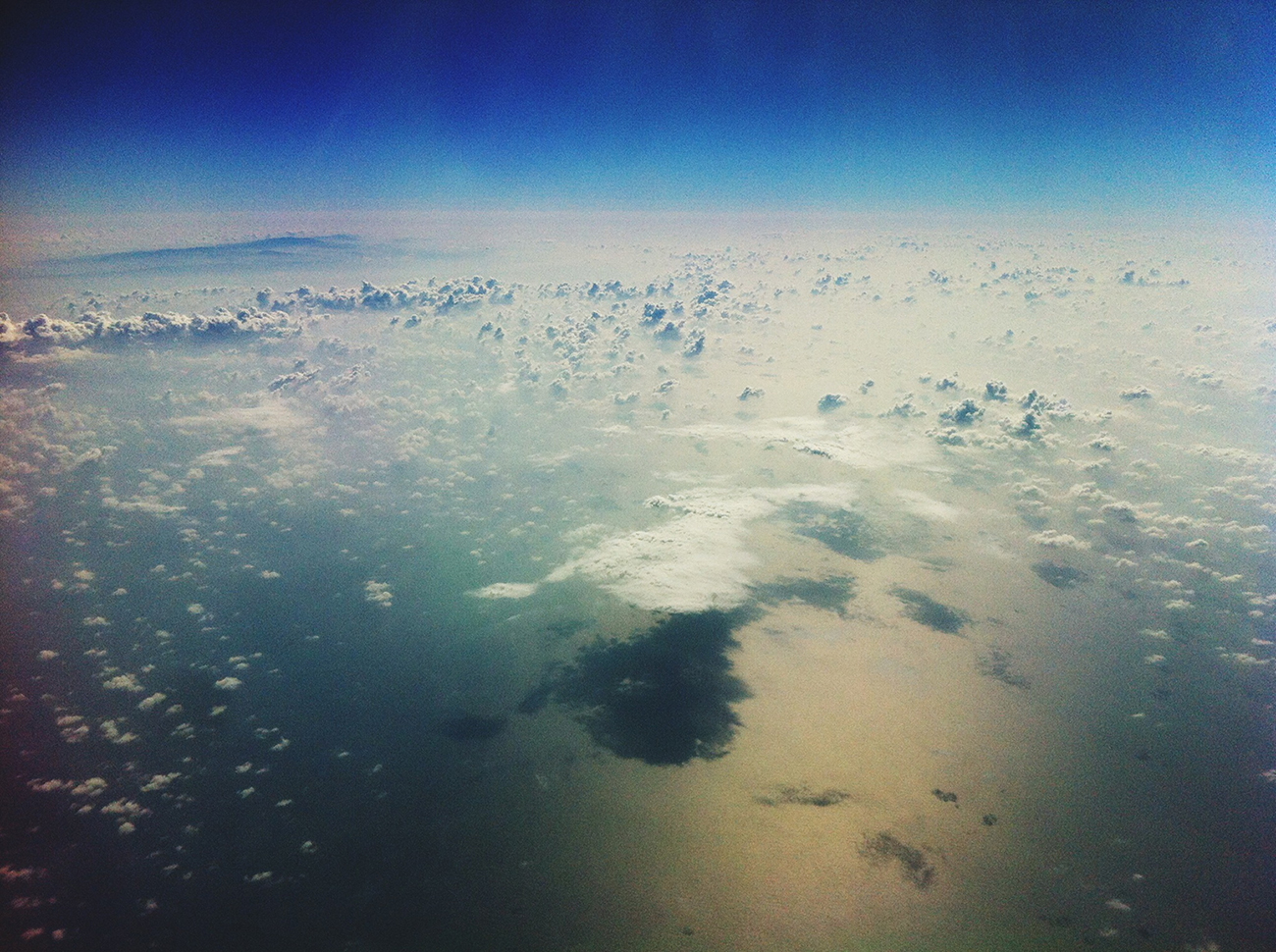
Scientists use weather satellites to measure the extent, height and thickness of clouds. But these measurements suffer from several issues that can limit how useful they are for detecting long-term changes in cloudiness. Small discrepancies in the data are caused by satellite sensors degrading over time and being replaced by new, more precise instruments. Another issue is the gradual change in the orbit of satellites themselves, says the study’s lead author, Prof Joel Norris, professor of climate and atmospheric sciences at the Scripps Institution of Oceanography in San Diego. He explains to Carbon Brief:“[For example,] polar orbiting satellites are intended to pass over each location on Earth at the same local time of day, but over time the orbits degrade. Thus, a satellite starts by passing over a location at 1pm local time but eventually shifts to 2pm, then 3pm, etc.”
This means a satellite might appear to record a change in cloudiness when it is, in fact, taking measurements at a different time of day.
The new study found a way to strip out the spurious variability in satellite records, to give a reliable indication of how cloud patterns changed between the 1980s and 2000s. The findings suggest the behaviour of clouds has been exactly as climate models suggest.
Changing cloudiness
The map below from the study shows how global cloudiness has shifted in the last few decades. The blue shading indicates areas where cloudiness has increased, including high latitude regions, the northwest Indian Ocean, and to the north of the equator in the Pacific and Atlantic oceans. The orange shading shows where there is now less cloud. This is in two main bands across the mid-latitudes of the northern and southern hemispheres.
“I expect the human contribution will grow as we put more greenhouse gases into the atmosphere and any large tropical volcanic eruptions will only provide a temporary reversal.”
Positive feedback
In addition to showing how warming is affecting cloud patterns, the paper discusses how those changes can, in turn, amplify human-caused warming. As clouds shift towards the poles, more of the ocean at lower latitudes will be exposed to incoming sunlight, says Norris. As the ocean is darker than the tops of clouds, this means the Earth will absorb more of the sun’s energy, leading to faster warming. Higher clouds lead to greater warming as well, Norris explains:“Clouds also restrict the emission of thermal infrared radiation to space – this is why cloudy nights are warmer than clear nights. A rise in cloud top will effectively thicken the ‘cloud blanket’ and reduce the emission of thermal infrared radiation to space, which will also lead to more global warming.”
Processes that act to reinforce the warming already taking place are known as positive feedbacks. Norris says:
“Our study provides observational confirmation that two previously proposed major positive cloud feedbacks appear to be currently operating in nature.”
Prof Steven Sherwood, professor of physical meteorology and atmospheric climate dynamics at the University of New South Wales, who wasn’t involved in the study, says the study increases trust in climate models’ projections of future climate warming. He tells Carbon Brief:
“These results considerably increase our confidence that predicted warming from CO2 is correct, since clouds have for many years been the main uncertainty and prior to this study we had only indirect evidence supporting the expected feedback.”
Prof Andrew Dessler, a professor of atmospheric sciences at Texas A&M University, who also wasn’t involved in the study, says the results provide additional evidence that climate models are doing “a reasonable job” of representing clouds. He tells Carbon Brief:
“It’s another ‘brick in the wall’ that supports our confidence in the mainstream view of climate science.”
Article information
Norris, J. R. et al. (2016) Evidence for climate change in the satellite cloud record, Nature, doi:10.1038/nature18273