
The albatross, El Niño and climate change: a tale of mixed fortunes
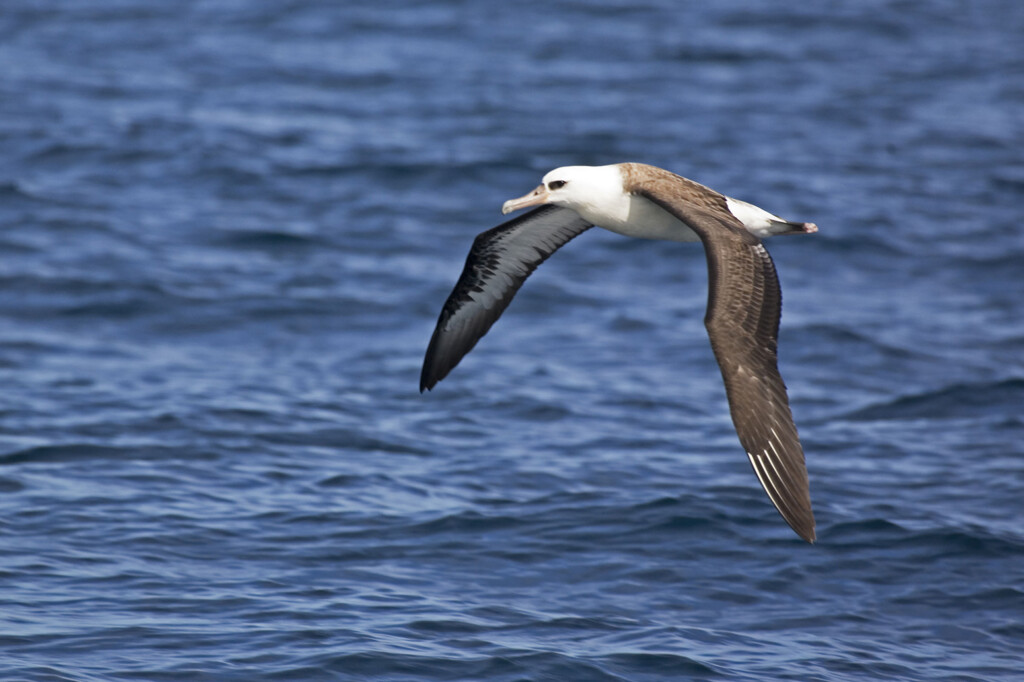
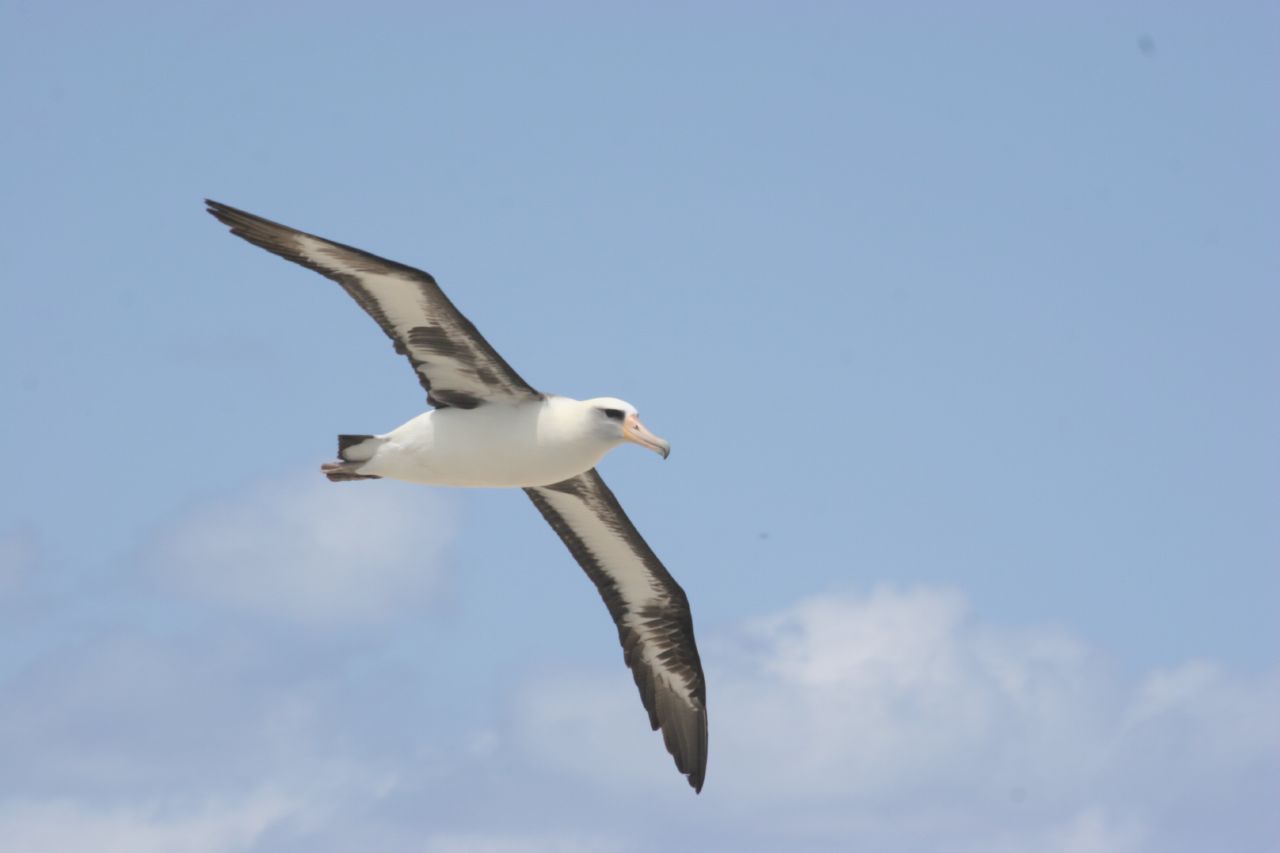
“This allows albatrosses to cover extensive distances, flying thousands of kilometres during a single foraging trip and achieving speeds of more than 100 kilometers per hour, while expending very little energy.”
Bethany Clark, a PhD researcher at the University of Exeter, whose work looks at how birds respond to environmental changes, but who wasn’t involved in the research, tells Carbon Brief:
“Albatrosses are masters of long-distance energy-efficient travel…They have evolved to travel by soaring and gliding, rather than using up energy by flapping their wings.”
While their graceful flying tactic might saves the albatross energy during flight, the upshot is that any changes in wind strength or direction can have a big impact. The paper explains:
“The magnitude and direction of the wind field can have important influences on where albatrosses forage; birds often use flight paths that maximize travel with favourable winds.”
Satellite-tracking
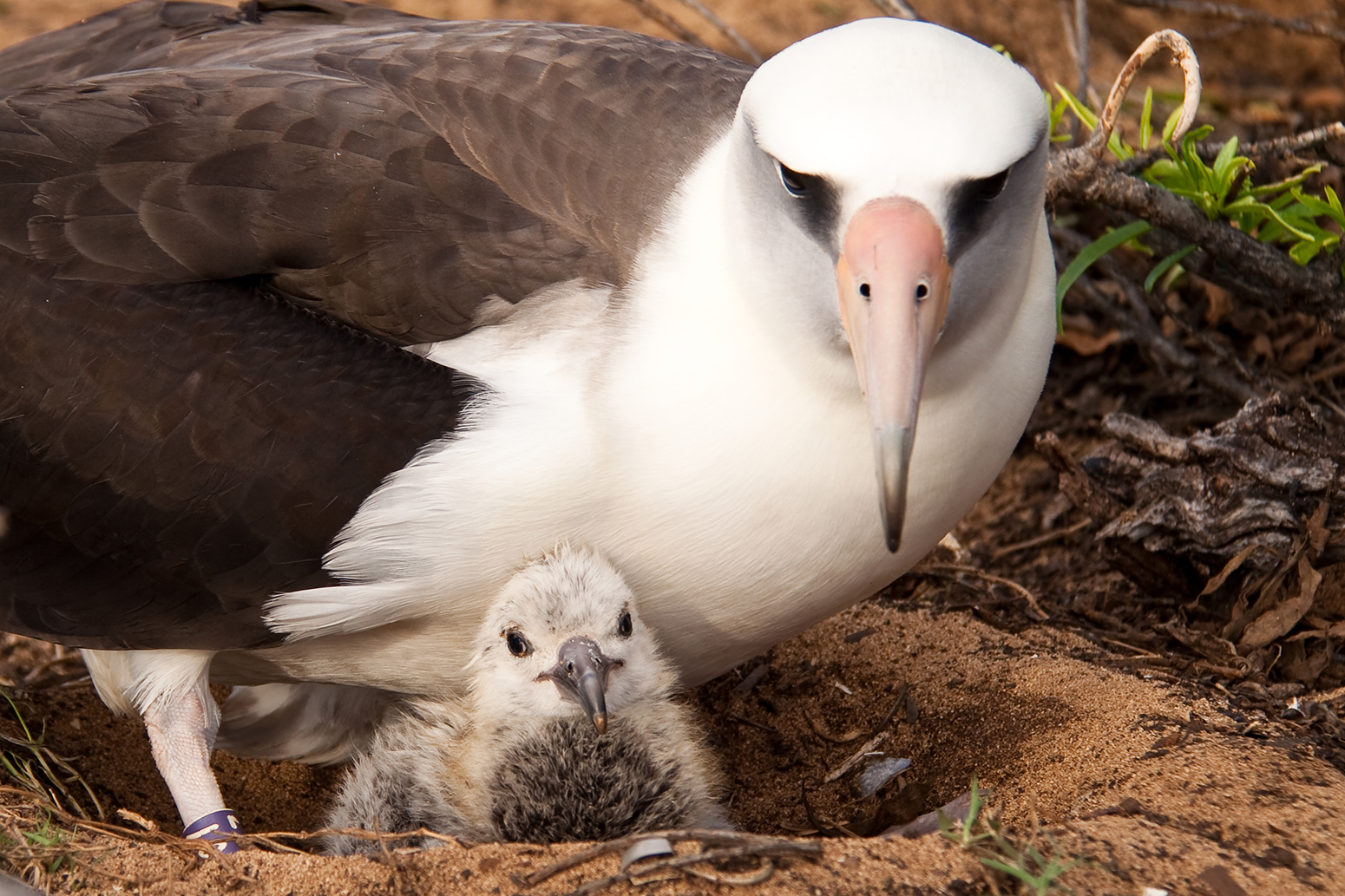
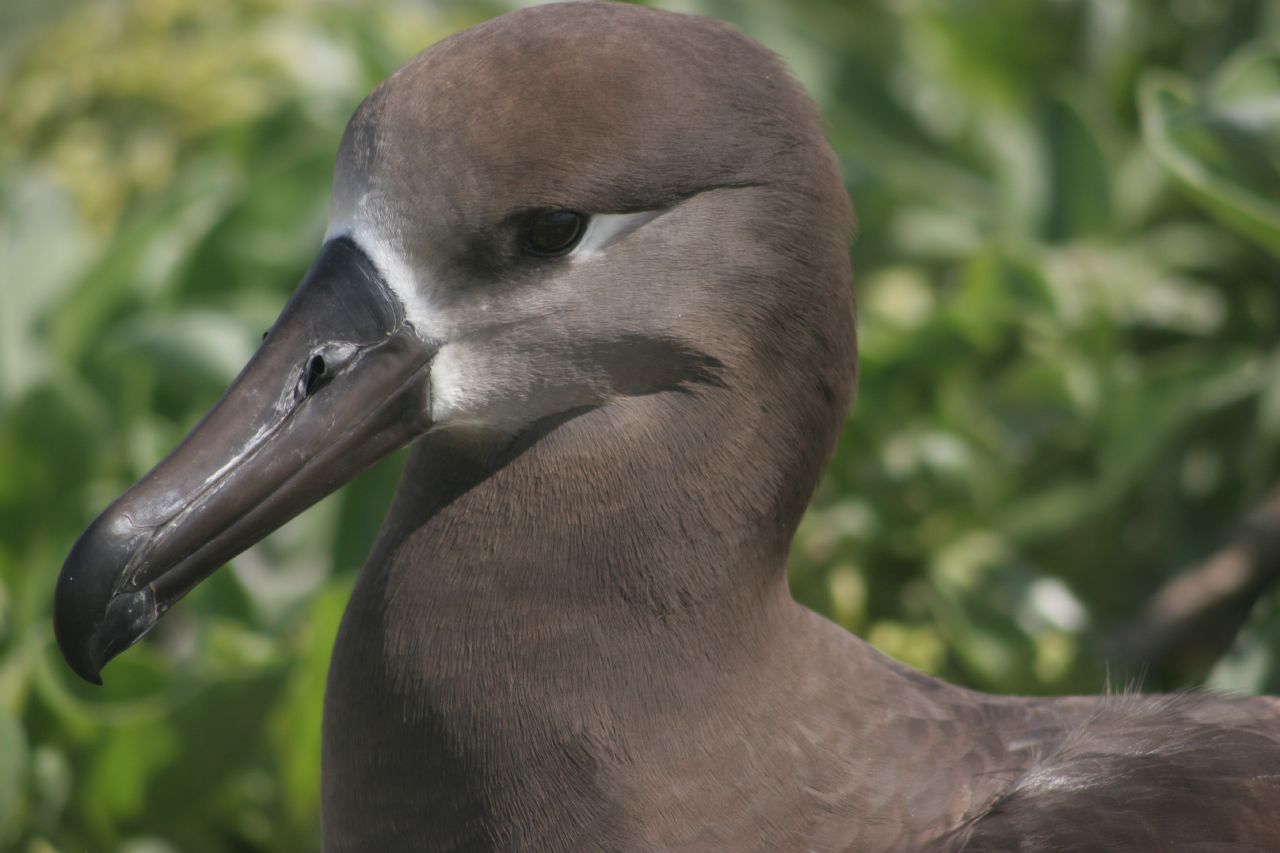
Most albatross species breed in the Southern Ocean. But today’s study looks at two species of Albatross native to the central North Pacific – the black-footed albatross and Laysan albatross.
The new study tracked individuals over a 10-year period between 2002 and 2012, looking specifically at how their flight patterns are affected by El Niño and its colder sibling, La Niña.
The two phases of the El Niño Southern Oscillation (ENSO) have opposite wind signatures. The paper explains:
“During El Niño events, easterly trade winds decrease in the central Pacific, while trade winds increase during La Niña events.”
To track the birds’ movements over time, the scientists attached satellite transmitters to the feathers of the birds, which periodically beamed their position back to a receiver on the ground.
The team tagged 107 Laysan and 108 black-footed albatrosses at Tern Island in the Northwest Hawaiian Islands, also home to thousands of seabirds, monk seals and green sea turtles.
If you’re curious about how scientists go about tagging a giant bird, here is a video by Dr. Steve Votier from the University of Exeter, who wasn’t involved in the new research, to explain.
Riding the winds
Albatrosses are generally thought to benefit from stronger winds because it means they expend less energy and can cover even more ground during fishing trips. Clark explains:
“Windy weather keeps the albatrosses in the air, so high wind speeds help birds to travel faster and so find more food.”
For this reason, the scientists behind the new study expected the birds to receive a boost during periods when the trade winds are strongest. But they found a more complicated picture.
Whether or not the birds saw the benefits of stronger winds depended to a large extent on the species in question and which stage of their breeding cycle was affected, the paper notes.
“When incubating eggs or raising larger chicks, albatrosses are less time constrained than during the brooding period and may benefit from large-scale wind patterns.”
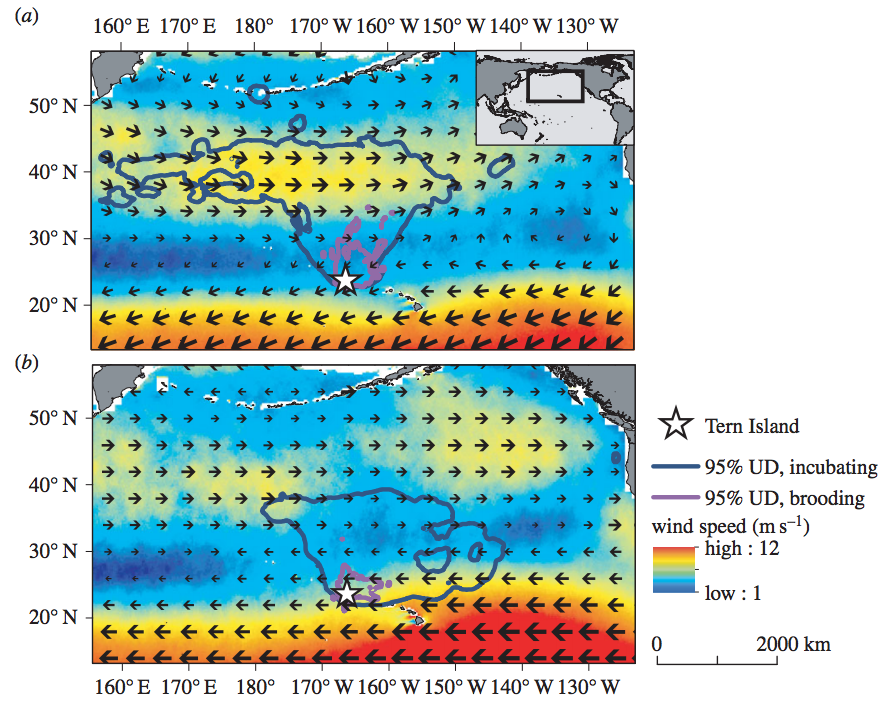
During El Niño, the winds around the albatrosses incubation habitat strengthens. The scientists found this gave the birds an extra in-flight boost during feeding trips. They tended to gain weight over the breeding season, meaning they stayed in better overall health.
This was only true for Laysan albatrosses, however. Their black-footed cousins forage in waters much further south, gaining little benefit from the stronger trade winds. The paper notes:
“This may contribute to the higher reproductive success of Laysan albatrosses during El Niño conditions.”
Looming La Niña
Once the chicks are born in June or July, the picture changes. The hungry mouths need feeding regularly, and the emphasis for feeding trips shifts from long and leisurely to short and efficient.
The necessity to keep fishing trips to a few days means the birds are unable to take advantage of favourable winds, losing the benefit they had enjoyed before.
During a La Niña, the winds strengthen around their brooding grounds and the birds can end up expending more energy than usual, Thorne tells Carbon Brief:
“Our results suggest that increased wind speed increases travel costs for brooding albatrosses, likely because the time constraints of the brooding period mean that albatrosses have limited capacity to avoid headwinds while foraging.”
The extra energy expended may partly explain why albatross tend to have lower reproductive success during La Niña events, says Thorne. With a La Niña now looking very likely to develop by the end of 2016, this could be true of this year’s North Pacific cohort.
But La Niña doesn’t necessarily spell bad news for all albatrosses everywhere, says Thorne.
“Depending on their movement capabilities and the location of breeding colonies and foraging habitat, different seabird species show different responses.”
“Breeding albatrosses could initially benefit from these changes…However, in the long term these benefits may be offset by increased energetic costs of reaching distant foraging grounds.”
The effects of climate-induced wind changes aren’t limited to albatrosses, Clark explains:
“Many other seabirds are affected by at-sea wind conditions, including around 100 species of petrels and shearwaters, many of which are endangered species.”
Climate change will carry consequences other than changes in winds, too. Shifts in the locations of feeding areas will be an important factor, says Thorne.
“Highly productive regions in northern regions of the North Pacific have shifted farther north over the past 30 years…which has likely reduced accessibility to preferred feeding grounds for albatrosses during the breeding season.”
Further shifts to the north are predicted in the future under climate change, she says, noting that there may be other impacts on food availability that are far less straight-forward to predict.
Main image: Laysan Albatross, Phoebastria immutabilis flying over the sea. Credit: hstiver/Getty Images.
Article information
Thorne, L.H. et al., (2016) Effects of El Niño-driven changes in wind patterns on North Pacific albatrosses. Royal Society Interface. DOI: 10.1098/rsif.2016.0196