
Heatwaves, droughts and wildfires in Australia: What's the link to climate change?
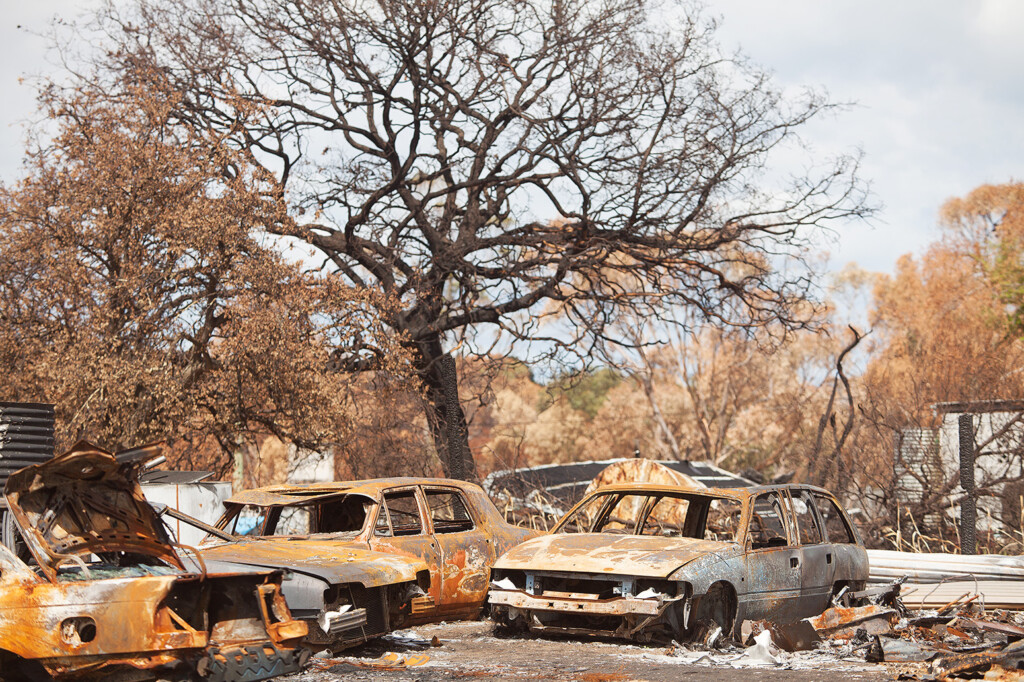
The current heatwave – in terms of its duration, its intensity and its extent – is now unprecedented in our records.
What’s causing the heatwave – is it climate change?
Just like the rest of the world, the average temperature in Australia has risen in the last century due to human activity. According to a recent study by the Australian Bureau of Meteorology, the average temperature across the continent has gone up by 0.9 degrees since 1910. Warren Truss, Australia’s acting opposition leader said this week, it’s “too simplistic” to link the current wildfires to climate change – and to some extent he’s right. Attributing a specific event to climate change is difficult as we can’t be certain whether it would have happened if the world wasn’t warming. But the link between extreme weather events and climate change can’t be dismissed that easily. By increasing global temperatures, humans are changing the environment in which extreme events form. Or as Jones puts it:Compared to other types of extreme weather events like storms or flooding, it’s perhaps easier to see how heatwaves could increase in a warming world. In other words, there are logical reasons why a warmer planet would bring increasing numbers of hot, dry days. Scientific research suggests the world is now experiencing more than three times as many months with record-breaking temperatures than would be expected on a planet that isn’t warming. Other research suggests the risk of an event as serious as the European heatwave in 2003 has at least doubled as a result of global warming. So while scientists can’t attribute specific events to climate change, they do know that over time climate change is likely to lead to more prolonged periods of high temperatures – a point that Australian Prime Minister Julia Gillard has also noted.Clearly, the climate system is responding to the background warming trend. Everything that happens in the climate system now is taking place on a planet which is a degree hotter than it used to be.
Drought
The heatwave in Australia is coming on top of several months of extremely low rainfall, causing widespread drought conditions across the continent. Just as temperature extremes are linked to climate change, it seems logical that drought would be too. Rising global temperatures lead to greater evaporation of water off the land, which increases the chances of already hot and dry places being tipping over into drought conditions. Indeed, the Intergovernmental Panel on Climate Change (IPCC) concluded in its Fourth Assessment Report, published in 2007, that “globally, the area affected by drought has likely increased since the 1970s”. But in its 2012 Special Report on Extreme Events (SREX), the IPCC was a little more cautious about past and future trends. A number of factors other than temperature affect evaporation, like wind speed, vegetation cover and aerosols affecting sunlight, which climate models can’t yet fully represent. From the data available, the IPCC predicts with “medium confidence” that droughts are likely to intensify in the 21st century in some seasons and areas.And what about the wildfires?
Extended dry conditions lead to parched vegetation. This, in turn, makes the land more susceptible to the spread of wildfire. As Gary Morgan of the Bushfire Cooperative Research Centre in Melbourne told New Scientist:And it’s likely to get worse. The IPCC Fourth Assessment Report predicted that in south-eastern Australia, the number of days with the risk of extreme fire will increase by up to 25 per cent by 2020, and up to 70 per cent by 2050.Much of this grass is fully dried and is ready to burn.
Caution
As ever, caution is needed when talking about the role of human activity in extreme events. And each type of extreme event is different from the next, so the same rules don’t necessarily apply to flooding, hurricanes, droughts and heatwaves. But while it’s important not to be too simplistic, rising background temperatures in Australia may make record breaking heat events and their dramatic consequences increasingly common in the future.Main image: Burnt out motor vehicles and trees, destroyed by bushfire, Dunalley, Tasmania.
Article information
Updated 10th January 16:11 – A quote incorrectly attributed to Tony Abbott has been amended. It now refers to acting opposition leader Warren Truss.