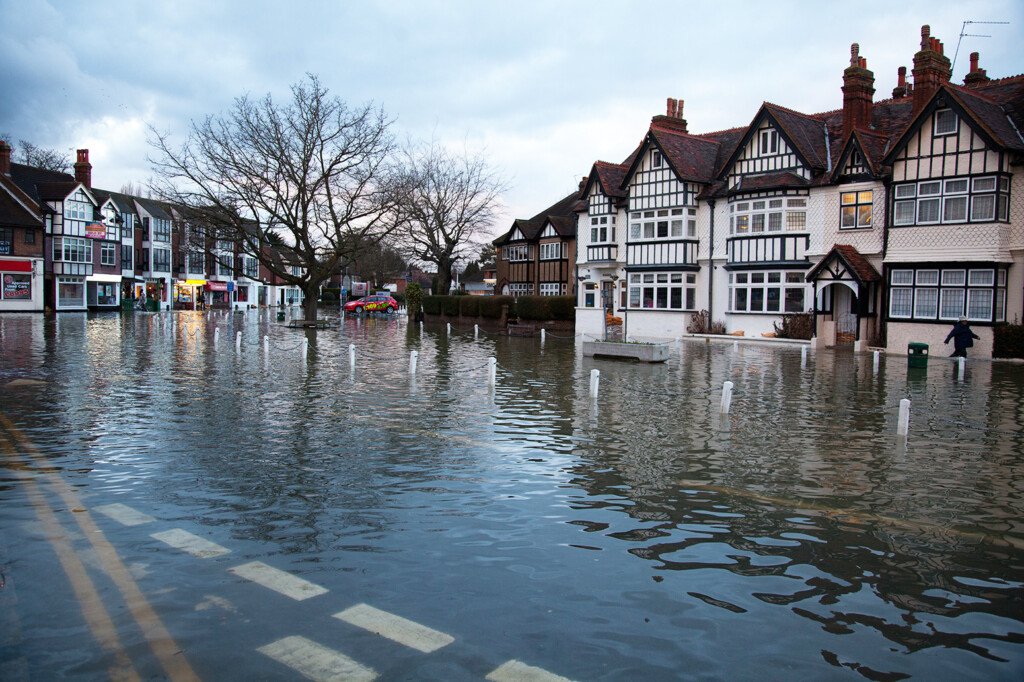
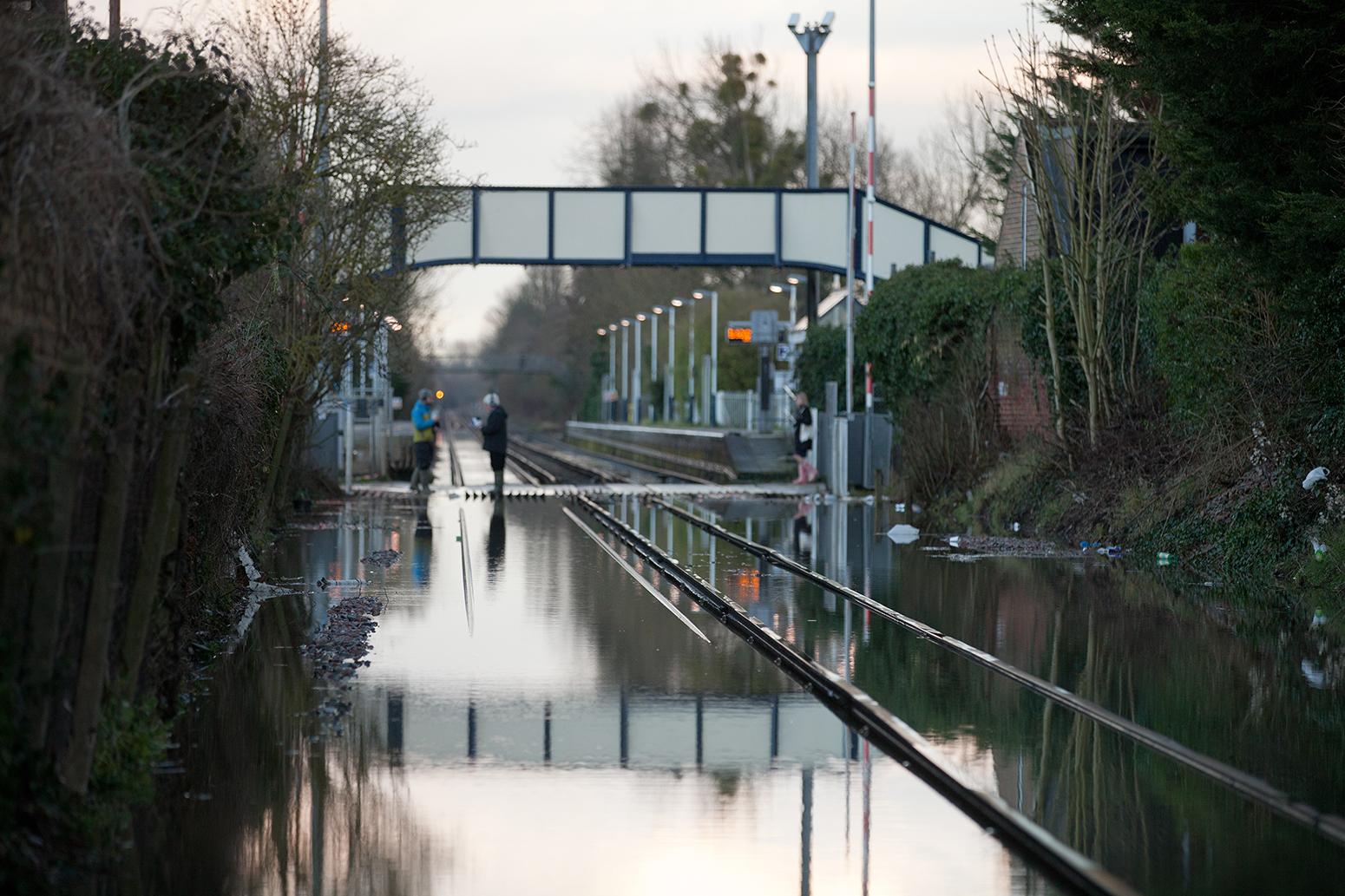
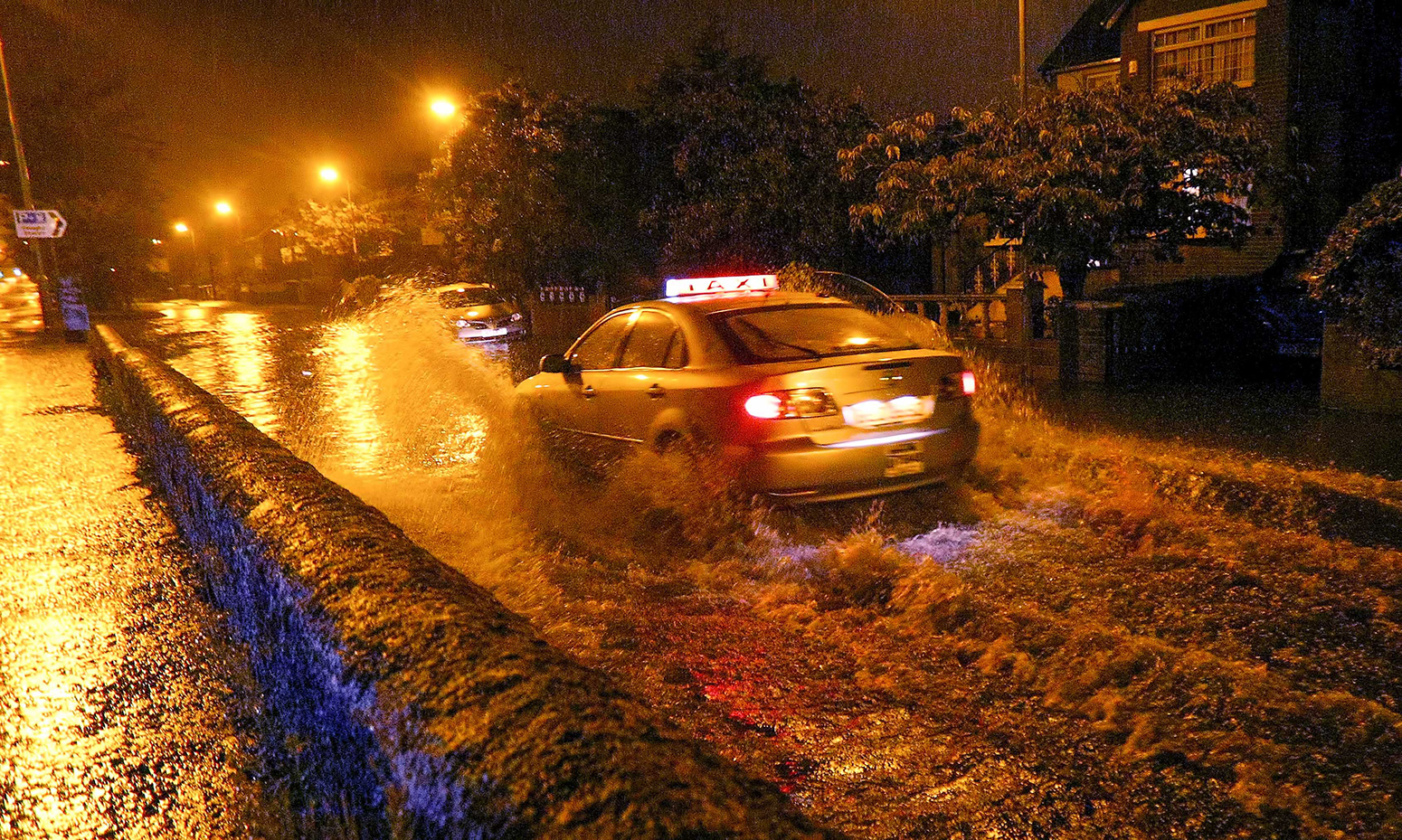
The winter of 2013/4 saw a succession of storms batter the UK, leading to heavy rain and severe flooding across large parts of the country.
The odds of those storms bringing such extreme wet weather were seven times higher than on a planet that wasn’t warming, according to a new analysis by Met Office scientists.Today’s study is part of a special issuepublished in the Bulletin of the American Meteorological Society that looks in depth at extreme weather events across the world in 2014.Unusual streak
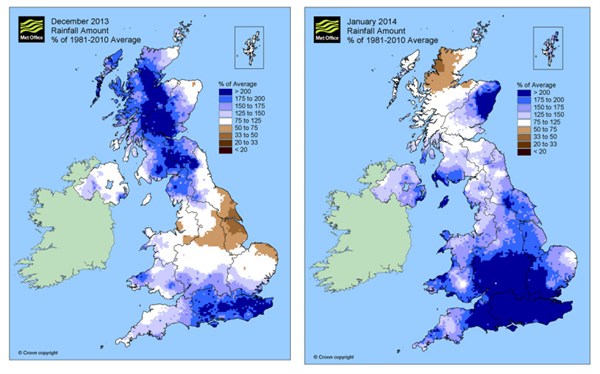
The winter of 2013/14 was one of the most exceptional periods of rainfall in England and Wales in at least 248 years. It marked the wettest December and January in the UK as a whole since 1910.
In January, parts of the southern England received more than 200 per cent of the average rainfall for the month. Source: Met OfficeThe simplest answer to what caused the floods was what today’s Met Office analysis calls an “exceptional clustering of vigorous storms” sweeping the UK one after the other.
Each storm dumped a huge amount of rain, while winds whipped up storm surges that overwhelmed coastal flood defences. With the storms so quick in succession, rivers burst their banks and the ground quickly became saturated, leaving nowhere for the excess water to go.
The unusual run of storms was caused by the North Atlantic jet stream – a river of fast flowing air high up in the atmosphere – being further south than usual, the paper explains. That meant more storms were directed towards the UK than might otherwise be.
There are a number of possible reasons for why this happened, all of which are linked to natural climate cycles, the authors say.
So, what role, if any, did climate change play? The answer lies not in the unusual run of storms itself, but in the amount of rainfall the storms delivered, and how that’s changed over time.
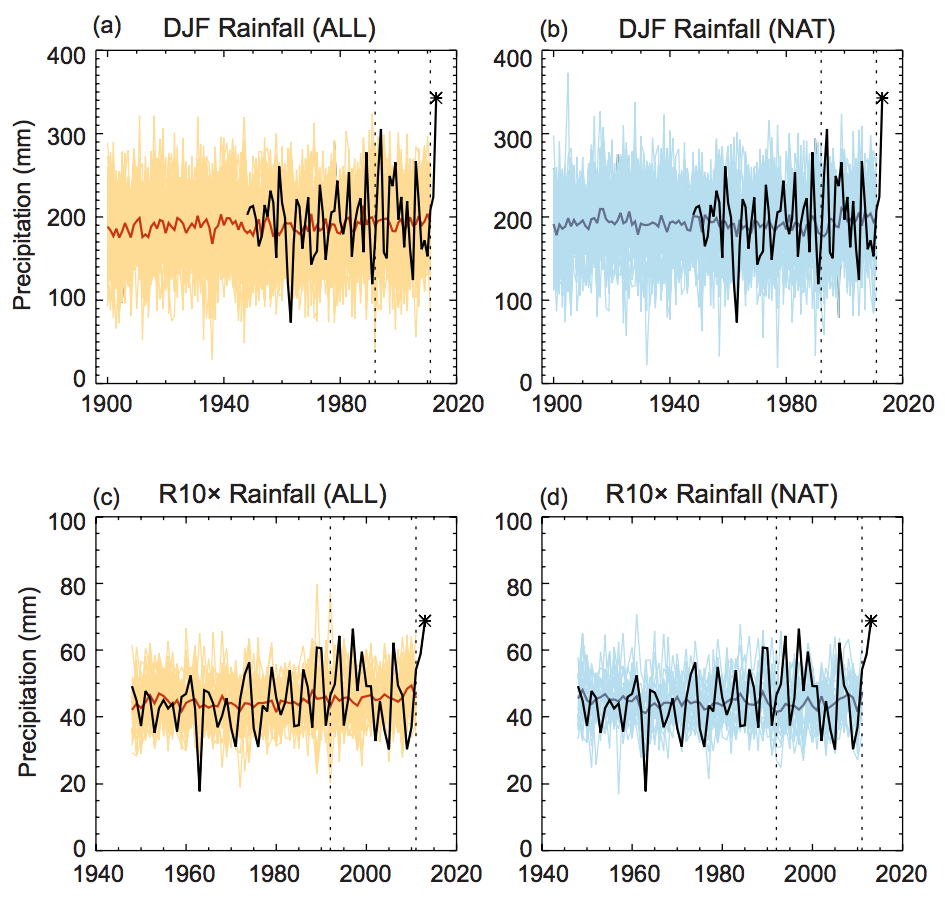
The UK’s wet wintersFirst, the authors separated out the last 20 years of winters to represent the “current climate”. They then grouped together all those in which the jet stream and atmospheric circulation patterns developed in a similar way to 2013/4. They found that the chances of extreme rainfall was eight times higher than in winters without those characteristic weather patterns. Dr Nikos Cristidis, a senior scientist working on extreme weather attribution at the Met Office and lead author on the new study, tells Carbon Brief:
[The circulation] translates into more rainfall over the UK. South westerly winds drive moisture from warmer parts of the Atlantic over the UK, hence, we tend to get more rain.
We do expect to see a move towards more warm wet winters in the UK under the effect of climate change. Julia’s assessment of the available observational evidence is consistent with this expectation. Our work provides additional evidence based on a new evidence from state of the art climate models.
Evidence is stacking up that climate change played a role in bringing more rain than we would have seen otherwise in the winter of 2013/4. This, in turn, contributed to the flooding we saw, but was by no means the only factor. What scientists aren’t doing is linking the existence of the storms themselves to climate change. While this might all seem like a frustratingly nuanced conclusion, the distinction between what drives heavy rainfall, storminess and flooding is important when it comes to understanding climate change. They are linked, but not the same.
Christidis, N. & Stott, P. (2015) Extreme Rainfall in the United Kingdom during winter 2013/2014: The role of atmospheric circulation and climate change. Bulletin of the American Meteorological Society. DOI: 10.1175/BAMS-D-15-00094.I