
The Carbon Brief Interview: Prof Joanna Haigh
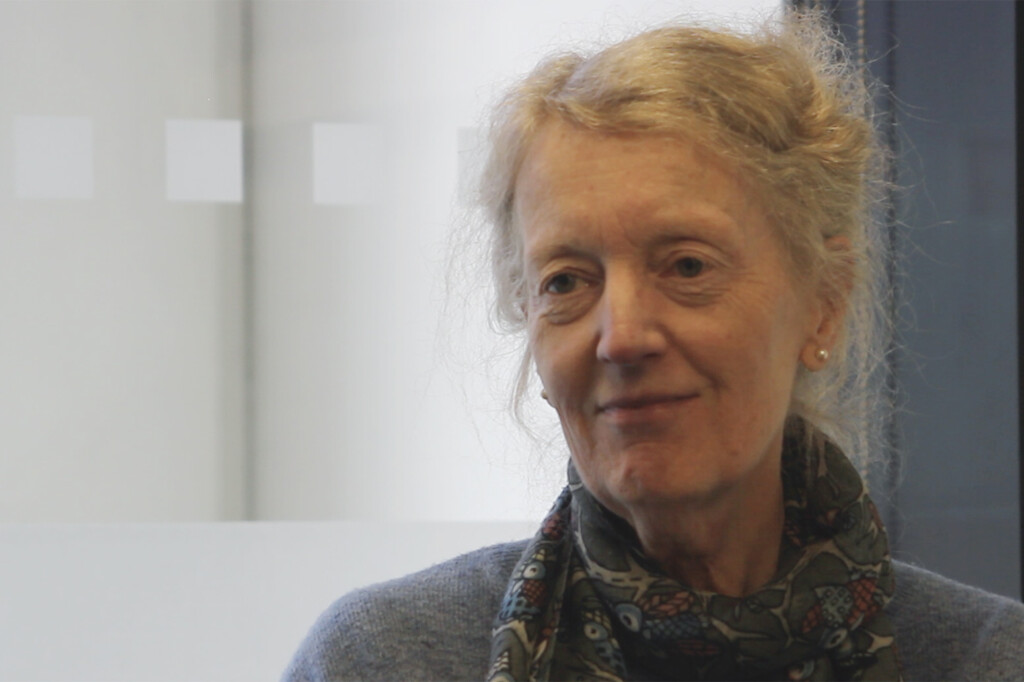
- Haigh on her decision to study the climate: “To be honest, I didn’t really think of it as a career. When I was choosing A Levels I just chose what I was good at.”
- On her awareness of climate change: “We were aware of it back in the late 1970s. There was a lot of talk about the greenhouse effect.”
- On her early research: “My research was on stratospheric ozone, so this is back in the late 1970s – before the discovery of the ozone hole.”
- On studying the influence of the sun on the climate: “I’d got interested in this whole issue about the sun’s effect on climate. I was really looking at it very much from a physics perspective, what the sun can and can’t do.”
- On being an IPCC lead author: “It’s a lot of work because you have to do a lot of writing, and you have to be very careful because everything is reviewed, and re-reviewed, and re-reviewed again, and again, and again.”
- On the format of IPCC assessment reports: “The IPCC has already demonstrated that it can be more effective when it produced the 1.5C report last year.”
- On expectations for the sixth IPCC assessment report: “From the science perspective, I think there’ll be quite a bit of work on climate sensitivity, which remains a fairly controversial topic, certainly something which has still got quite a wide range of uncertainty on it.”
- On her career highlights: “In the Grantham Institute it’s entirely strategic and motivated by trying to get society to be low carbon essentially.”
- On her career regrets: “It’s a general perspective on my career is that I should have been more assertive.”
- On advice for early-career scientists: “Don’t just do things because people tell you to do it, take a step back and say, ‘Is this right for me?’”
- On coping with online harassment from climate sceptics: “I’ve had it for many years. I think it got to a worst point after I did Radio 4 programme, The Life Scientific.”
- On not being on social media: “I think if I went on social media I’d spend all day doing that and not focus on the day job.”
- On advice on how to deal with online harassment: “Just remember these are very sad people that haven’t got anything better in their lives to do.”
- On unanswered climate science questions: “If we knew much more precisely how the climate responded to increased greenhouse gases we would be in a much stronger position to state that and push some action on it.”
- On early CMIP6 results suggesting high climate sensitivity: “It seems that the values of sensitivity that you get out are larger when you have a more highly resolved model.”
- On meeting the Paris warming limits: “I think it’s going to be very, very, very difficult to get to 1.5C.”
- On the impact of Trump on climate policy: “Within the US you’ve got the individual cities and states that are going for it more strongly than ever, almost because they’ve been revitalised, invigorated by Trump saying such stupid things.”
- On what mitigation might look like by 2050: “There’ll be a lot more wind and solar, maybe there’ll be other exciting things, more local smart grids and things for sharing out electricity once the renewables have gained it.”
- On what impacts might look like by 2050: “That’s the scary bit, isn’t it? That is the scary bit if you think of the coastal inundation to start with and the millions of people who live by the coast.”
- On negative emissions and solar geoengineering: “Solar geoengineering, I’m afraid I think it’s a fool’s paradise, and I’ve been saying the same thing for many years.”
- On fluctuating interest in solar geoengineering: “It’s not that new, but certainly it’s got some proponents now who have ears in high places and, indeed, big funding to investigate it further, so it’s not going to go away.”
- On a net-zero goal for the UK: “I think in all these things you have to be pragmatic, you have to be ambitious, but you have to be pragmatic, there’s no point trying to force something to fit a curve that it’s not going to fit.”
- On the UK’s influence on global climate policy: “We’re not going to look as a good international example on how to do it if we set up a load of policies and then don’t act on them.”
- On Brexit’s potential impact on climate and energy policy: “If we got a very extreme Brexit – and we’re chucking out all the environmental legislation and the extreme right-wing is just doing what it likes and raping and pillaging the environment – it’s very bad news.”
- On Brexit’s potential impact on scientific research: “I think we’d be definitely losing out in terms of the expertise in the universities.”
- On whether Brexit already having an impact: “A number of academics – young academics from Europe – have gone home.”
- On Brexit affecting research funding: “I do think that scientists by nature, and particularly in climate science, are very collaborative, and we just couldn’t do things really, or not as well, without talking to people across the world and working on projects together.”
- On Extinction Rebellion and the youth climate strikes: “I absolutely support them. Not in any violent and extreme way, but just shouting about it, absolutely. Causing people to sit up and take notice.”
Article information
This interview was conducted by Robert McSweeney on 17 April 2019 at the Grantham Institute for Climate Change and the Environment at Imperial College London.