
Analysis: Solar overtakes gas power in Asia for first time ever
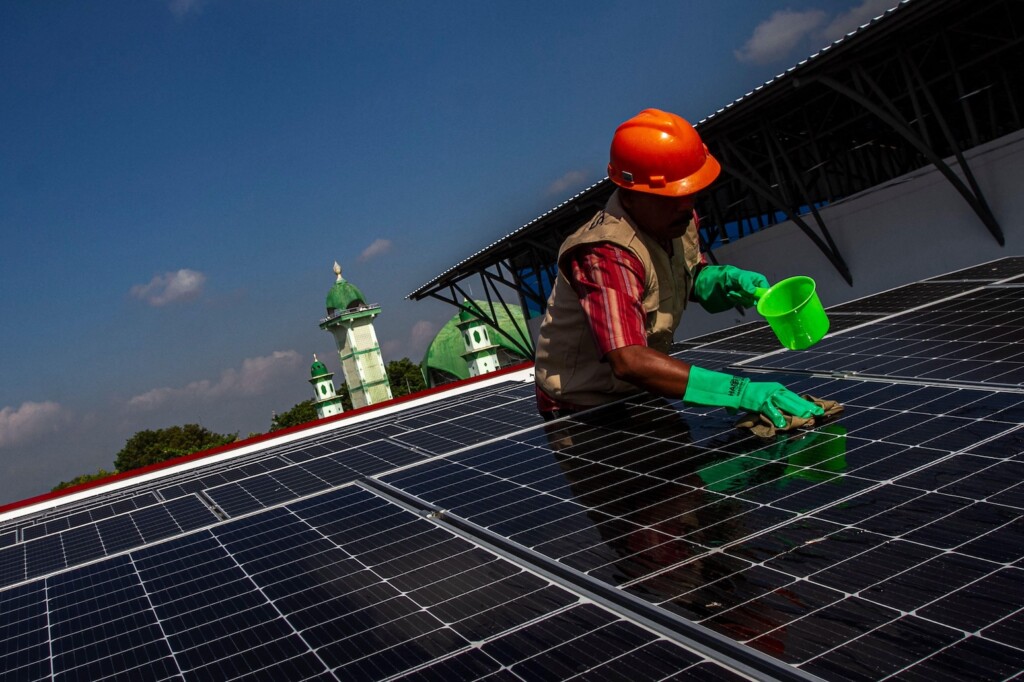
Solar has overtaken gas power in Asia to become the continent’s third-largest source of electricity, according to new analysis by Carbon Brief.
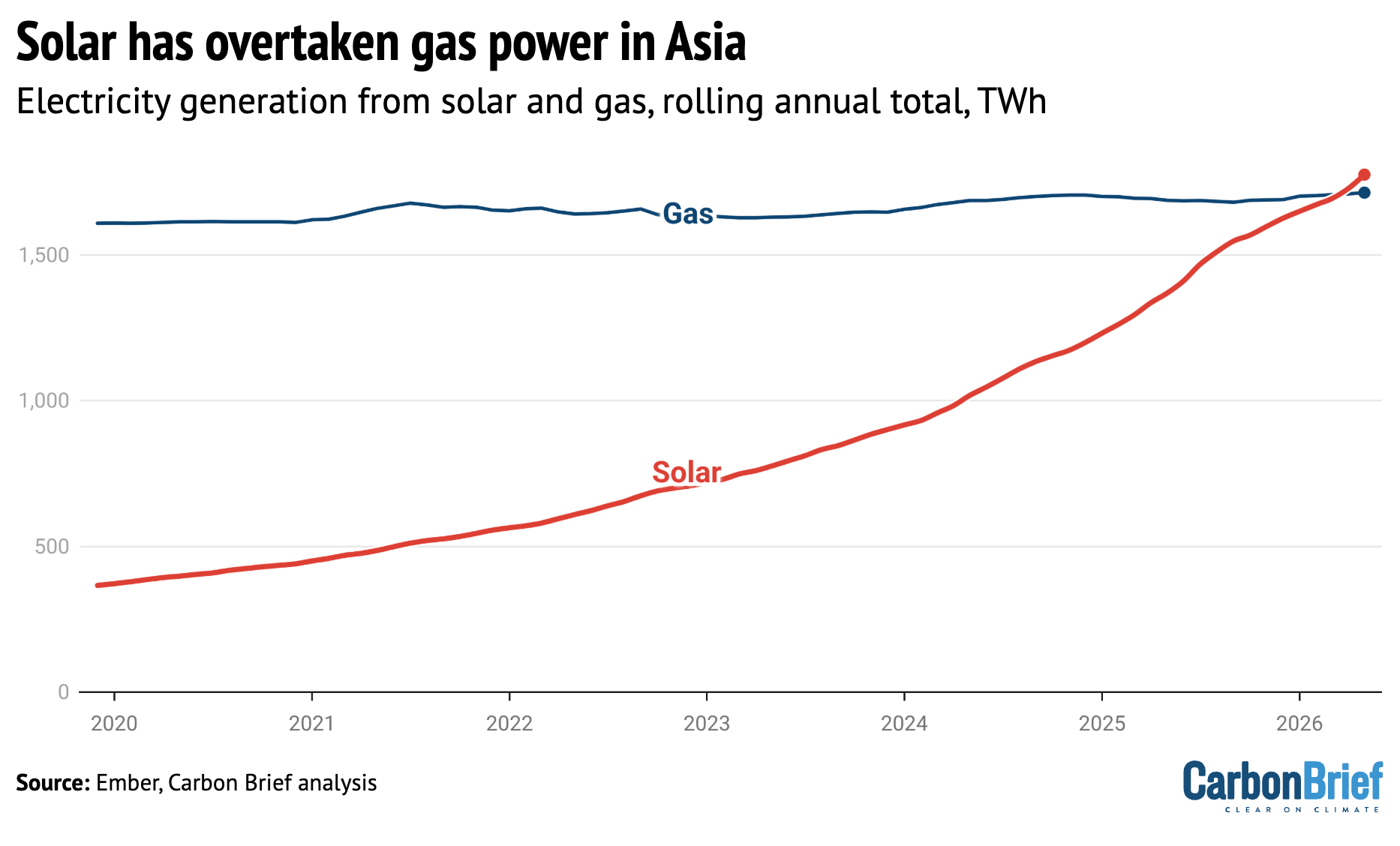
The rapid expansion of solar power in nations such as China, India and Pakistan has seen its annual output increase nearly fourfold since 2020.
Asia accounts for around 60% of the world’s solar-power growth in this period, putting the continent at the heart of the global solar boom.
Coal and hydropower remain Asia’s largest sources of electricity, generating roughly 52% and 12% of the continent’s power each year, respectively.
Yet despite expectations that gas power would undergo “explosive growth” in the region, output has stalled due to supply disruptions, relatively high gas prices and growth in clean alternatives.
In contrast, solar has surged, generating some 1,727 terawatt hours (TWh) of electricity in the 12 months to April 2026.
As the chart below shows, this pushes it just ahead of gas, which generated 1,711TWh over the same period and has remained roughly flat for the past several years.
The milestone reflects wider trends in the global electricity mix, with monthly generation from both wind and solar surpassing gas generation globally for the first time in April 2026.
Asia’s solar expansion has been driven largely by China, which accounts for nearly three-quarters of the growth in the region’s output since 2020.
Record installations in 2025 took China’s cumulative installed capacity to 1.2 terawatts (TW) by the end of the year.
China also dominates global solar supply chains, hosting more than 80% of solar manufacturing capacity.
This means it has played an important role in enabling solar deployment in other Asian countries through cheap solar-panel exports. Amid the energy crisis sparked by the Iran war, Chinese solar exports to Asia doubled to reach a record 39 gigawatts (GW) in March 2026.
Meanwhile, Asian countries have faced a number of challenges in expanding gas-power capacity. Most of these nations are reliant on imported liquified natural gas (LNG) to support their gas-power projects.
Around 81GW of planned gas capacity in Asia was cancelled in 2022 and 2023, amid LNG supply disruptions and price spikes following Russia’s invasion of Ukraine.
LNG import terminals and pipelines have faced delays and cancellations in south Asia and South Korea as a result of rising fuel and construction costs, as well as weak demand for gas power.
Global gas turbine shortages have also delayed plans to build new gas-power plants in Vietnam and the Philippines.
While Asia’s gas-power capacity increased by 22% between 2019 and 2024, gas-fired generation has only increased by a modest 6% over the same period. Existing gas plants are not always operating at high capacities, as gas is outcompeted by other fuels.
These trends are not uniform across the region, with increased generation in some countries – such as China and Taiwan – being offset by declines in others – such as Japan and India.
Although China has nearly doubled its gas -power generation in the past decade, gas supply issues and high prices make it less competitive than coal and renewables.
The expansion of clean energy has also reduced the need for gas-fired generation in many Asian countries. Pakistan’s widely reported “boom” in rooftop solar is one notable example of this trend.
According to the International Energy Agency (IEA), the latest energy crisis has “renewed gas supply reliability and affordability concerns” among gas-importing countries in Asia, many of which are highly dependent on gas flows through the strait of Hormuz.
Methodology
The figures in this article are based on Ember’s monthly and annual electricity data for Asia.
Annual data was used for the year-end data points, as the coverage is more complete compared to the monthly data.
Rolling annual totals based on monthly data were used to interpolate between the annual data points.
The figures in the chart are based on Ember’s definition of Asia, which covers the following countries: Afghanistan, Armenia, Azerbaijan, Bangladesh, Bhutan, Brunei, Cambodia, China, Georgia, Hong Kong, India, Indonesia, Japan, Kazakhstan, North Korea, Kyrgyzstan, Laos, Macao, Malaysia, Maldives, Mongolia, Myanmar, Nepal, Pakistan, the Philippines, Singapore, South Korea, Sri Lanka, Taiwan, Tajikistan, Thailand, Timor-Leste, Turkmenistan, Uzbekistan and Vietnam.
This does not include some countries that are part of the continent of Asia and that use relatively large amounts of gas, such as Iran, Saudi Arabia, the United Arab Emirates (UAE) and Russia.