
Guest post: Air passengers face a bumpier ride due to climate change
Why turbulence occurs
Clear-air turbulence is caused by wind shear – changes in wind speed or direction in a relatively short vertical space – at altitude. The contrasting wind speed causes the different layers of the atmosphere to flow over each other, which can lead to instabilities and swirling air. It’s the most hazardous form of turbulence experienced by passengers. As its name suggests, clear-air turbulence is invisible and so it cannot easily be detected and avoided. It tends to occur in and around jet streams, mountains, weather fronts, and thunderstorms. Jet streams can be a pilot’s friend as much as their enemy. Jet streams are tubes of fast-flowing air that wrap around the globe. They can be thousands of miles long, but they are usually relatively narrow and only a few miles deep. Flying in jet streams can create an ideal tailwind, but also a headwind that’s best avoided. The uneven temperature changes in the upper atmosphere associated with climate change – with the tropics warming faster than the poles at flight cruising altitudes – appear to be making the North Atlantic jet stream stronger at those altitudes. (This is different from the changes that are occurring in the lower atmosphere.) While the stronger jet stream is good news for getting us from North America to the UK faster, it also means round trips could take longer and clear-air turbulence encounters could become more frequent.Increasing turbulence
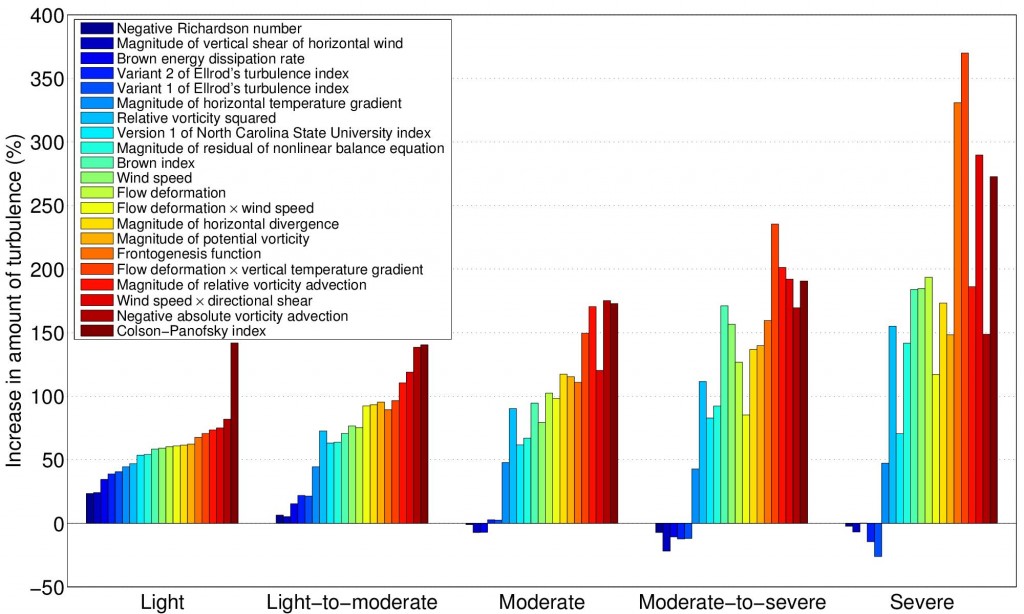
Higher wind speeds clashing in the atmosphere create the potential for increasingly common episodes of turbulence over large parts of the North Atlantic. We use a supercomputer and 21 different turbulence models to simulate how clear-air turbulence at an altitude of around 12km (39,000 feet) will be affected by climate change. You can see the projected changes for the North Atlantic in the figure below. It shows projected increases (red shading) and decreases (blue) in turbulence for a doubling of atmospheric CO2 compared to pre-industrial levels. The darker shading shows where more of the models come up with the same result.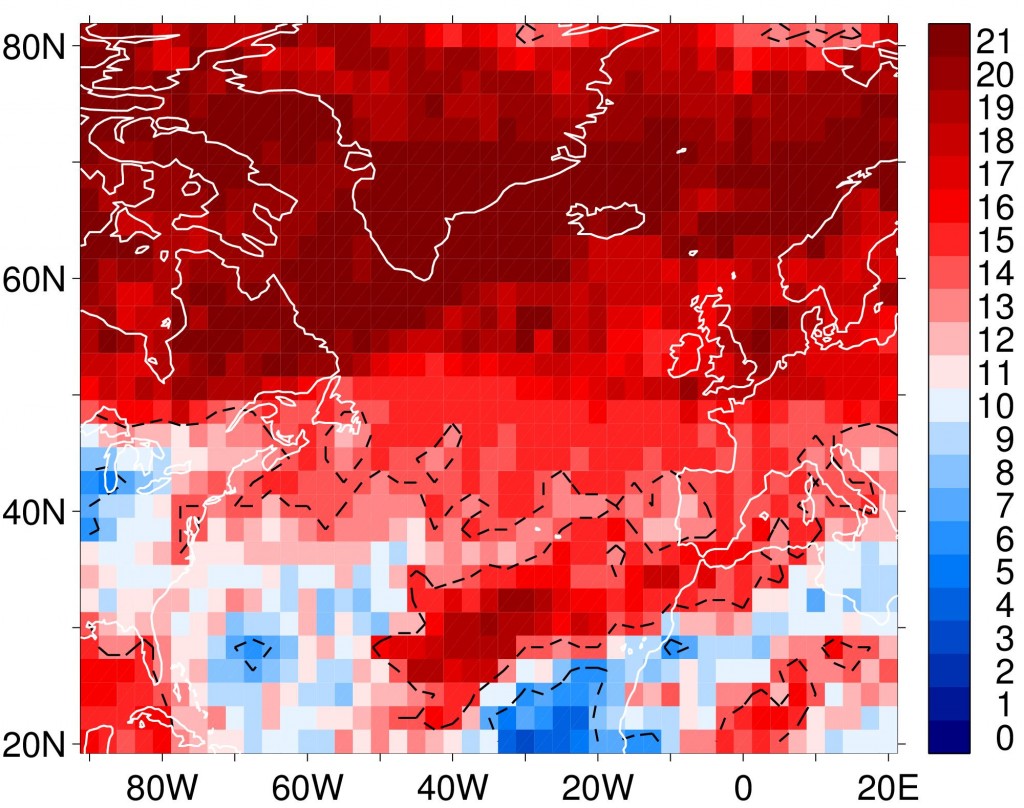
What impact could this have?
Aside from the risk of injuries, there are wider implications too. Diverting plane routes to attempt to avoid turbulence uses up more fuel and therefore pushes up fuel bills. Diversions also cause delays at airports, while injuries on board may force emergency landings and yet more delays. According to the USA’s National Center for Atmospheric Research (NCAR), turbulence costs commercial airlines $150-$500 million a year. If turbulence increases, these figures could increase. Higher costs for airlines tend to be passed on to passengers, which could mean more expensive tickets. The added risk of injury could also cause a knock-on impact for the insurance industry. The fact that one of the world’s busiest flight routes, the transatlantic corridor between Europe and North America, is in the region of the jet stream, means this is not an issue only affecting niche routes. This is literally the mainstream, where millions of passengers fly every year.What does the future hold?
Aircraft CO2 emissions are known to contribute to climate change, but what our latest study reinforces is that this is a two-way relationship. The CO2 produced from burning jet fuel is aviation’s biggest contributor, but aviation affects the climate in other ways, too. For example, the condensation trails (contrails) produced by flights can modify atmospheric temperatures. This means that, as well as making flights more efficient, airlines can explore other ways of reducing their impact on the climate. For example, airlines could reduce their contribution to climate change by making small changes to flight paths at relatively low cost. A small but growing body of academic research suggests that the aviation sector will be adversely affected by climate change. On the plus side, this means the sector has much to gain from reducing its emissions.Article information
Williams, P. D. (2017) Increased light, moderate, and severe clear-air turbulence in response to climate change, Advances in Atmospheric Sciences, doi:10.1007/s00376-017-6268-2.