
Hurricane Sandy-sized floods up to 17 times more likely by 2100
Storm surge
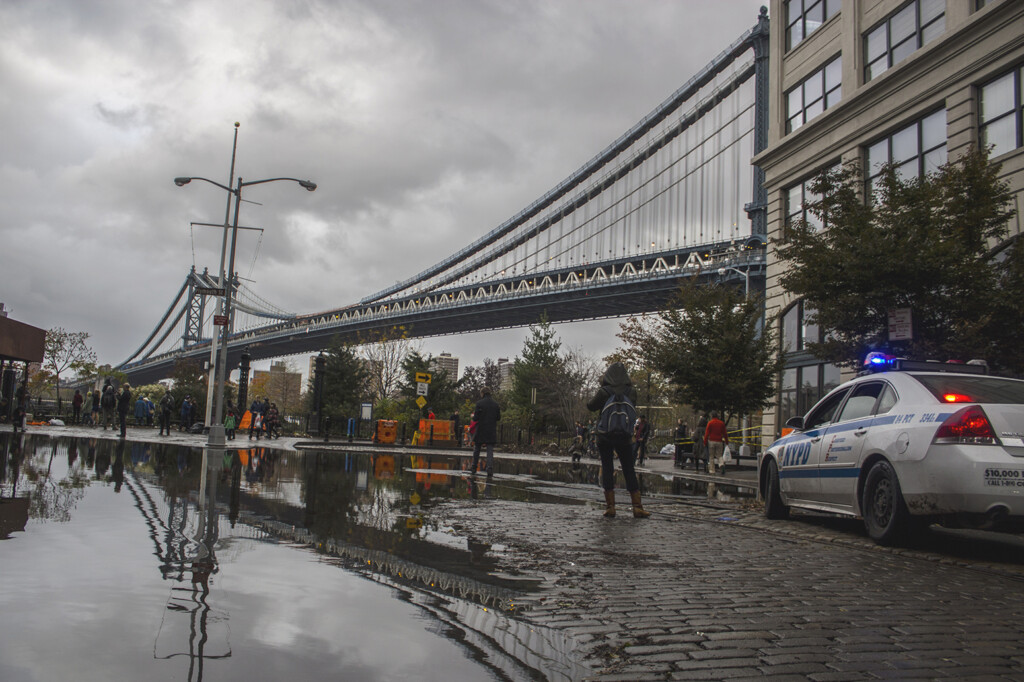
When a storm weather system is over the sea, its low pressure centre pulls up the surface of the water. Then, as the storm blows onto the land, the wind pushes the sea towards the coast, creating even higher sea levels and hitting the coastline with large waves. This is a storm surge. In New York City, the combined impact of the storm surge and a high tide saw sea levels reach a record height of 3.44m during Sandy. The surge swept up the East River, causing it to overflow its banks and flood Lower Manhattan, inundating seven major subway tunnels.
Uncertainty
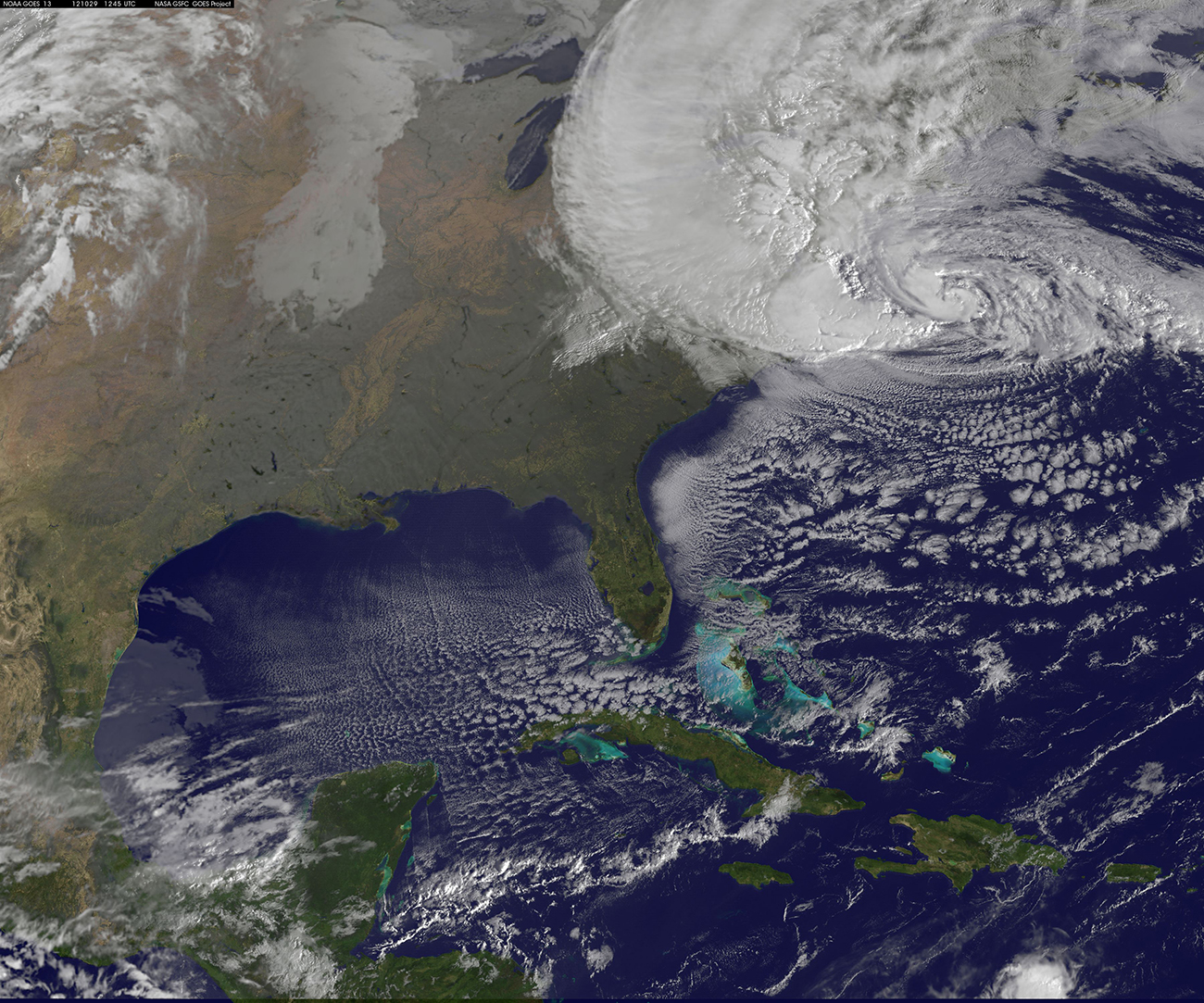
Whether tropical storms have been, or will be, made more frequent or intense by climate change is complicated and nuanced. Because hurricanes feed off warm waters, the theory goes that rising ocean temperatures have made – and will continue to make – hurricanes stronger. But pinpointing a trend has so far been hampered by poor data records. In the North Atlantic, where most data is available, the Intergovernmental Panel on Climate Change concluded (pdf) that while it is unlikely that the annual count of tropical storms has risen over the last century, it is “virtually certain” that the frequency and intensity of the strongest hurricanes has increased since the 1970s. Looking ahead, lead author Prof Ning Lin, assistant professor in civil and environmental engineering at Princeton University, says there is still uncertainty in climate models over how tropical storms will change. But it doesn’t mean the risks shouldn’t be considered, she tells Carbon Brief:“Some models show that storm activity will increase and – based on these models – the change in storm activity should not be neglected as it would significantly add to the effect of sea level rise.”
Projections of how sea levels will rise are much more certain, says Lin, and this plays the biggest role in the increasing flood risk. Even if tropical storms don’t become more intense or frequent, the recurrence of Sandy-like floods is still expected to increase from once every 400 years in the year 2000 to once every 90 years by 2100.
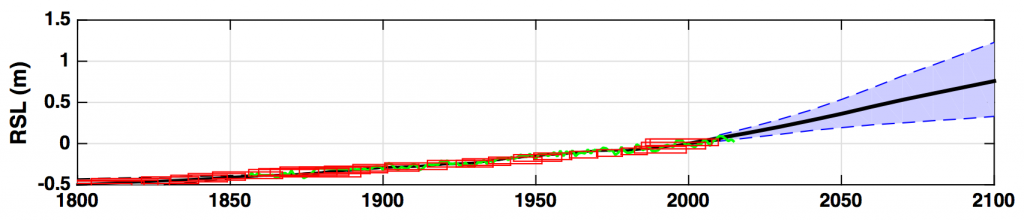
“This is a useful study, although with many assumptions, that indicates an increasing risk of damaging storm surges along the East Coast, and that conclusion is likely fairly robust, because sea level will continue to rise.”
Making a definitive prediction of how Sandy-like flood events could change in future is difficult, but the benefits for protecting coastal cities are considerable, says Dr Andra Garner (née Reed), from Rutgers University, who authored a similar study last year. She tells Carbon Brief:
“Our ability to understand the frequency with which we can expect such an event to occur – and how and why that frequency may have changed in the past or may change in the future – is vital, as we adapt and plan to try to prevent the kind of damage seen with Sandy when future flooding events occur.”
And as New York beefs up its defences to prevent future flooding, this study can help engineers ensure that they’re planning for the right level of protection for the future, says Lin:
“New York has started the planning of building coastal protection defence. Our analysis can help determine what magnitude of such defence – e.g., height of levees – is needed to protect the city from future increasing surge inundation.”
Article information
Lin, N. et al. (2016) Hurricane Sandy’s flood frequency increasing from year 1800 to 2100, Proceedings of the National Academy of Sciences, doi:10.1073/pnas.1604386113