
Zika outbreak ‘fuelled by’ El Niño and climate change
Public health emergency
First identified in Uganda in 1947, the Zika virus has gradually spread through the tropics – from Africa into southeast Asia and then across many small Pacific islands. The main carrier of the disease is the Aedes aegypti mosquito, but other species such as Aedes albopictus and Aedes hensilli spread Zika as well. Scientists estimate that the virus first entered South America through Brazil in late 2013, though the first infection wasn’t officially recorded until May 2015. In the months that followed, Zika spread throughout South and Central America and even into the US. In February this year, the World Health Organisation declared the outbreak a Public Health Emergency of International Concern. The designation was lifted about a month ago, but Zika remains a “significant enduring public health challenge requiring intense action.”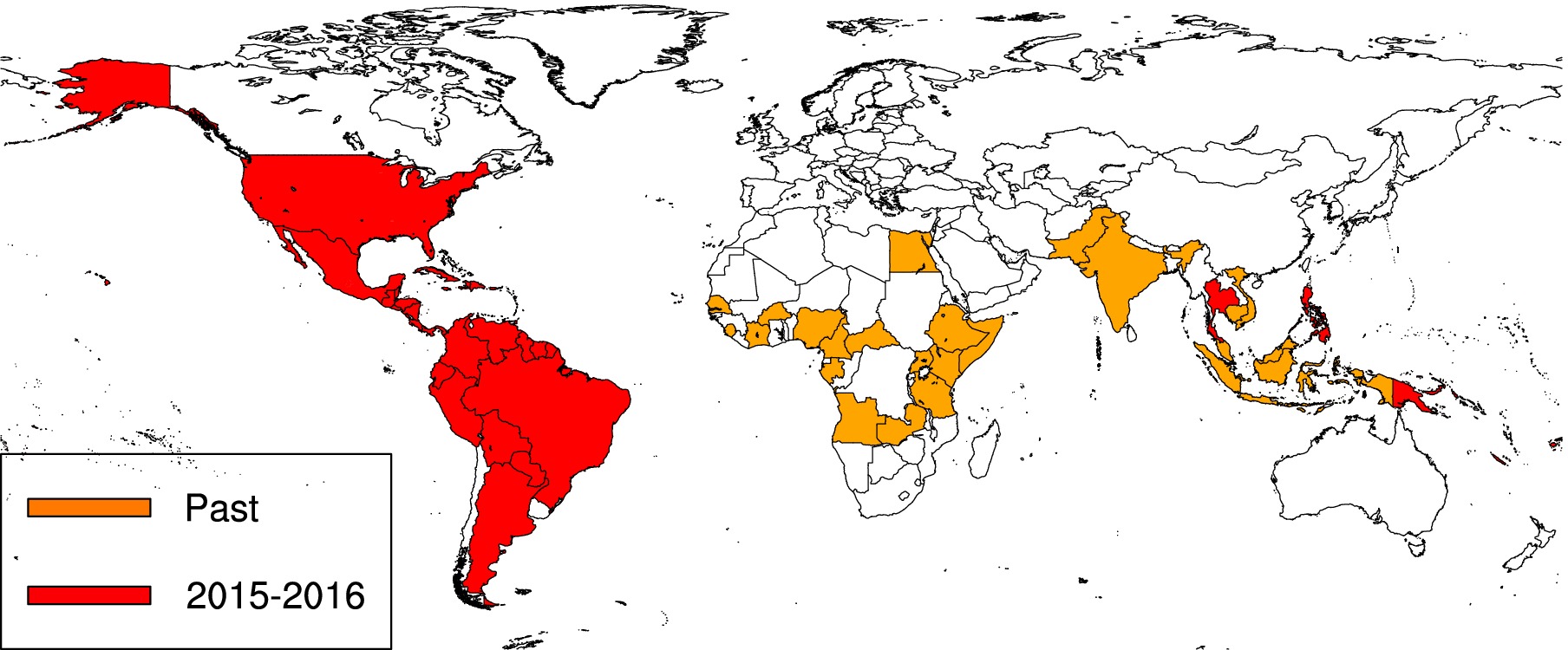
Climate influence
An outbreak of Zika needs three main ingredients, says lead author Dr Cyril Caminade, a research associate in the Institute of Infection and Global Health at the University of Liverpool. He tells Carbon Brief:“The minimum requirement for a vector-borne disease outbreak is the presence of competent mosquito vectors (Aedes mosquitoes), the presence of the pathogen (Zika is believed to have entered Brazil in 2013 but the World cup in 2014 must have helped too), and the presence of a suitable host (humans).”
There are then a series of factors that affect how far and how quickly an outbreak can spread. Some are socio-economic – such as poverty, access to sanitation, and the availability of healthcare and vaccines – but the climate ultimately “sets the background” to disease transmission, Caminade says. The distribution of mosquitoes, how long they live, how often they bite, and the incubation period of the virus – i.e. how quickly mosquitoes become infectious after biting an infected person – all tend to increase in warm conditions, Caminade says. And heavy rainfall creates pools of water in which mosquitoes lay their eggs.
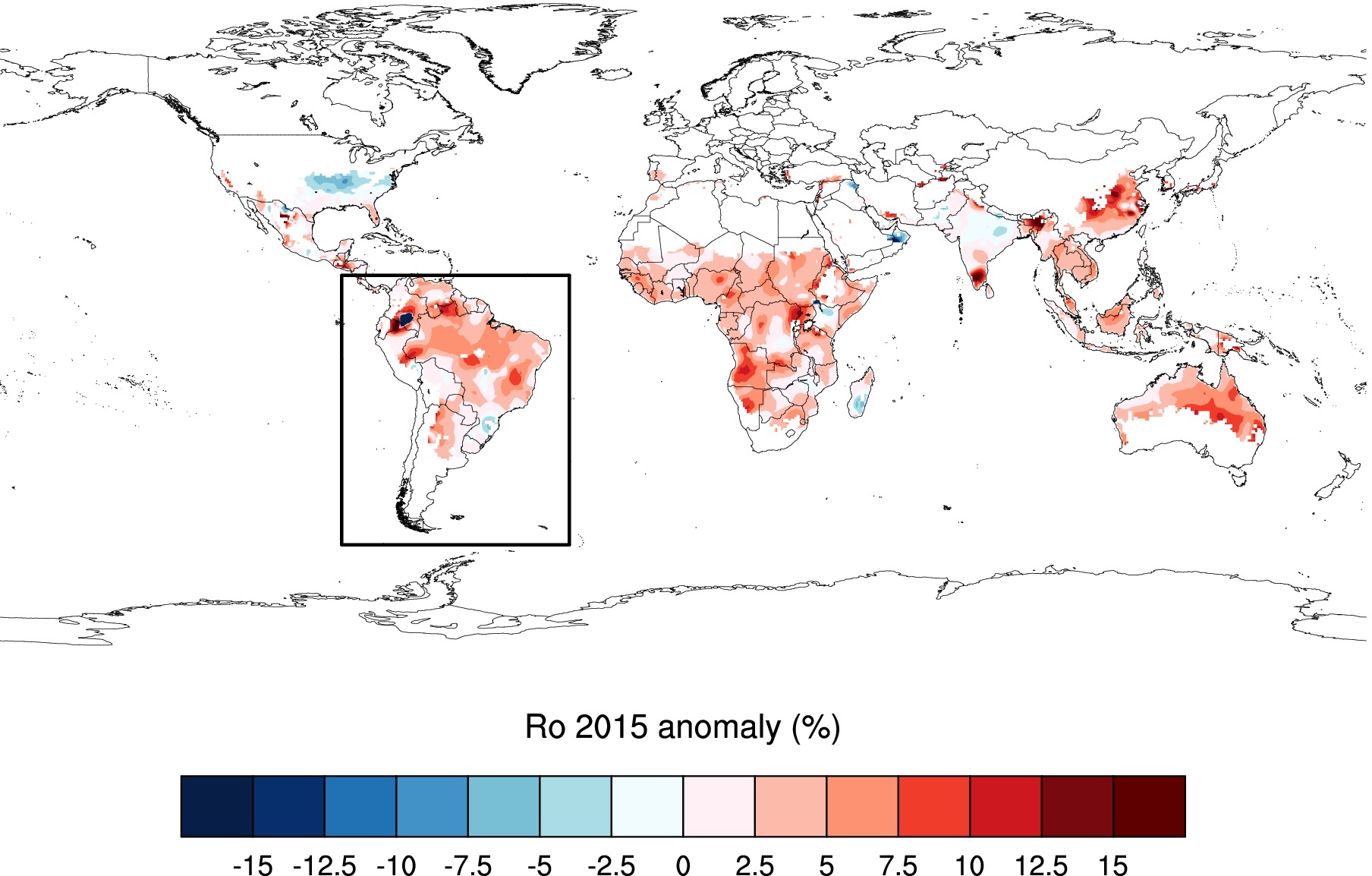
“The Zika virus has circulated in Africa since the 1950s and in Asia since the late 1960s and early 1970s. Thus the population has been exposed for a longer time period to the pathogen there.”
In contrast, the population of South America has only recently been exposed to Zika, which makes them “epidemiologically naïve” and therefore more susceptible to infections.Transmission potential
Another finding from the paper is that the summer climates of southeastern states of the US, southern China and some of Mediterranean Europe are also warm enough for the Zika virus, says Prof Townsend Peterson, a specialist in ecology and evolutionary biology at the University of Kansas who wasn’t involved in the study. He tells Carbon Brief:“Perhaps of particular interest from this study is the indication of considerable transmission potential for Zika virus pretty far north in North America.”
Confirming this finding will likely require further research, notes Peterson, as other studies have suggested that the habitat of Aedes aegypti mosquito doesn’t extend this far into North America. That said, climate change has the potential to push vector-borne diseases like Zika into higher latitudes and altitudes, says Caminade. Though the scale of any outbreak will depend on other non-climate factors too, he adds. In South America, for example, a large part of the population will have been exposed to Zika over the last two years. This means they are going to build up immunity to the virus, he says:“Some studies estimate that cases could occur over the following three years – during the mosquito season roughly between December and March – then herd immunity will likely cause a delay of about 10 years before such a large epidemic occurs again there.”
Article information
Caminade, C. et al. (2016) Global risk model for vector-borne transmission of Zika virus reveals the role of El Niño 2015, Proceedings of the National Academy of Sciences, doi:10.1073/pnas.1614303114.