
The Carbon Brief Profile: Indonesia
Politics
Indonesia is the world’s third largest democracy and almost 260 million people live across its chain of islands, of which there are an estimated 17,508. It also has the world’s largest Muslim population and is highly ethnically diverse, supporting more than 300 local languages. The country has held general elections since 1955, but only began holding presidential elections in 2004. Its current leader, President Joko “Jokowi” Widodo, was elected in 2014 and will face another election this April. Widodo is a member of the “left-of-centre” Indonesian Democratic Party of Struggle (PDI-P) and leads a majority coalition government with the support of nine political parties. Widodo is the first president in Indonesia to not come from an elite military or political background and remains untainted by the corruption allegations that dog other government officials. A year before he was elected, the Economist described him as “an honest man”. However, he faces criticism for doing little to advance human rights during his presidency. His campaign for reelection is centred around promises to boost economic growth, largely through more infrastructure development, and to increase measures to tackle terrorism and corruption – with any mention of climate change so far “tragically absent”, according to the Jakarta Post, an English-language Indonesian newspaper. Last year, Widodo boosted subsidies for diesel “amid worries that higher fuel costs [could] threaten his bid for re-election”, according to the Nikkei Asian Review, an Asia-focused financial publication. (He had previously overseen a “big-bang” removal of subsidies in 2015, according to the IEA, in a bid to reform Indonesia’s “decades-old” fuel support system.) A poll in January by Charta Politika, an Indonesian political consultancy firm, found Widodo had an approval rating of 53.2%. His biggest rival, Prabowo Subianto – a former army general who lost to Widodo in 2014 – had an approval rating of 34.1%.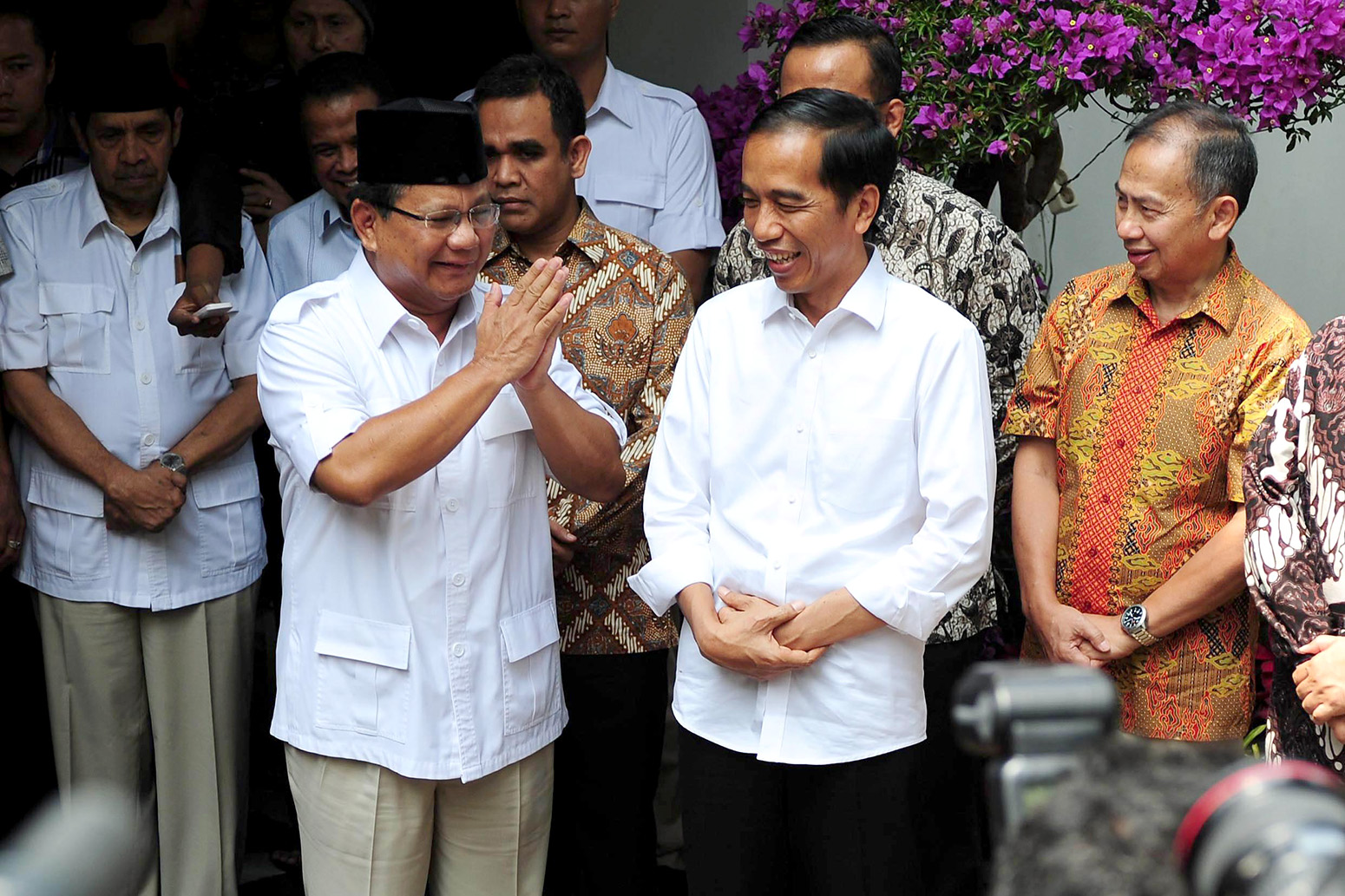
Paris pledge
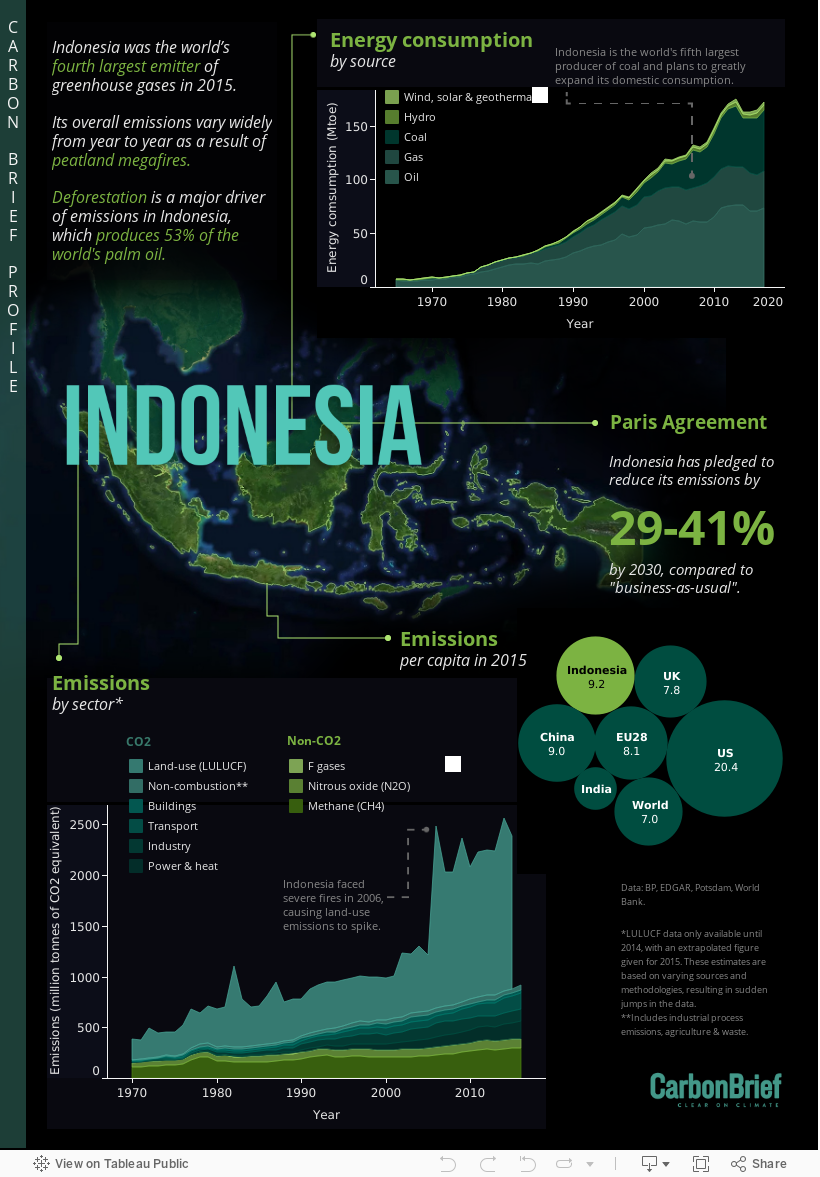
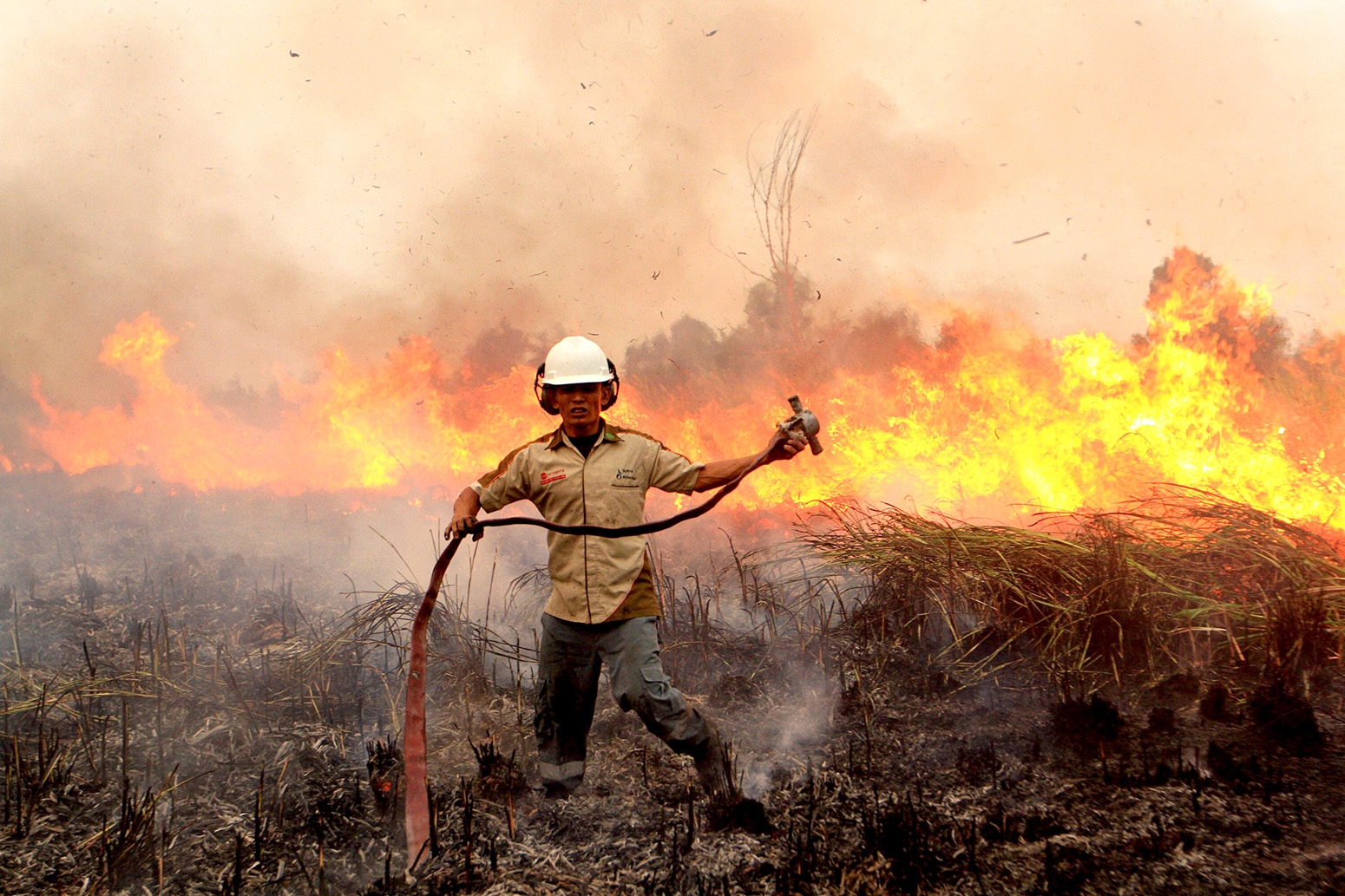
Indonesia is part of five negotiating blocs at international climate negotiations. These include the Like-Minded Developing Countries (LMDCs); the G77 and China; the Coalition for Rainforest Nations; the Organisation of the Petroleum Exporting Countries (OPEC) and the Cartagena Dialogue. (More information on each group is available in an in-depth explainer of negotiating blocs by Carbon Brief.) The country’s annual greenhouse gas emissions were 2.4bn tonnes of CO2 equivalent (GtCO2e) in 2015, according to data compiled by the Potsdam Institute for Climate Impact Research (PIK). The figure includes emissions from land use, land-use change and forestry (LULUCF). Indonesia’s emissions represented 4.8% of the world’s total global emissions for that year. Its per-capita emissions were 9.2 tonnes of CO2e that year – larger than the global average (7.0 tonnes of CO2e) and the average in China (9.0 tonnes of CO2e), the UK (7.7 tonnes of CO2e) and the EU (8.1 tonnes of CO2e). However, it is worth noting that Indonesia’s total emissions vary widely from year to year, largely as a result of variable peatland “megafires”. The chart below, which is taken from Indonesia’s latest biennial report to the United Nations Framework Convention on Climate Change (UNFCCC), gives an idea of how the country’s peatland fires can shift overall emissions. The chart shows emissions from peatland fires (blue), forestry and other land use (“FOLU”; green), waste (yellow), agriculture (pale green), industry (“IPPU”; red) and energy (orange). (It is worth noting that the figures shown are self-reported.)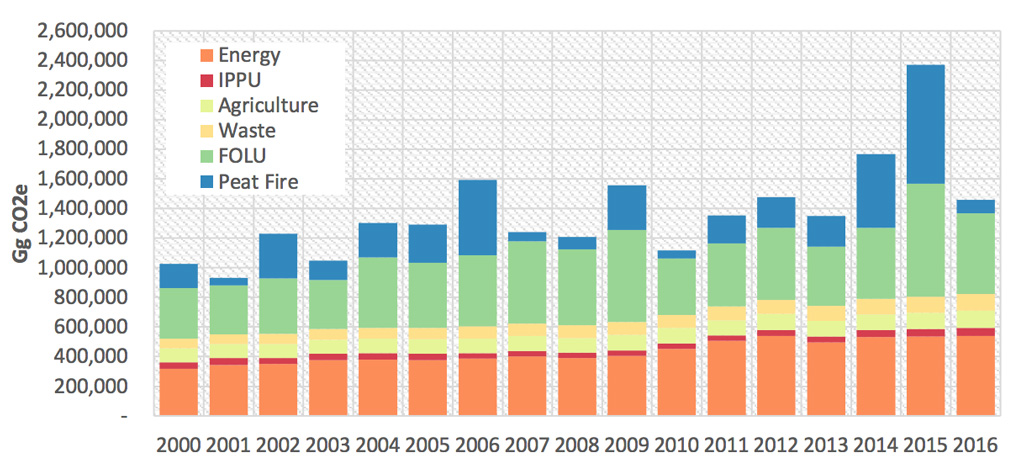
Deforestation, palm oil and fire
Indonesia contains 10% of the world’s tropical rainforests and 36% of its tropical peatlands. Tropical peatlands are wet and swampy forested environments with soil that can hold up to 20 times more carbon than other types of mineral soil. It is estimated that Indonesia’s peatlands hold around 28bn tonnes of carbon – the equivalent of nearly three years of global fossil fuel emissions.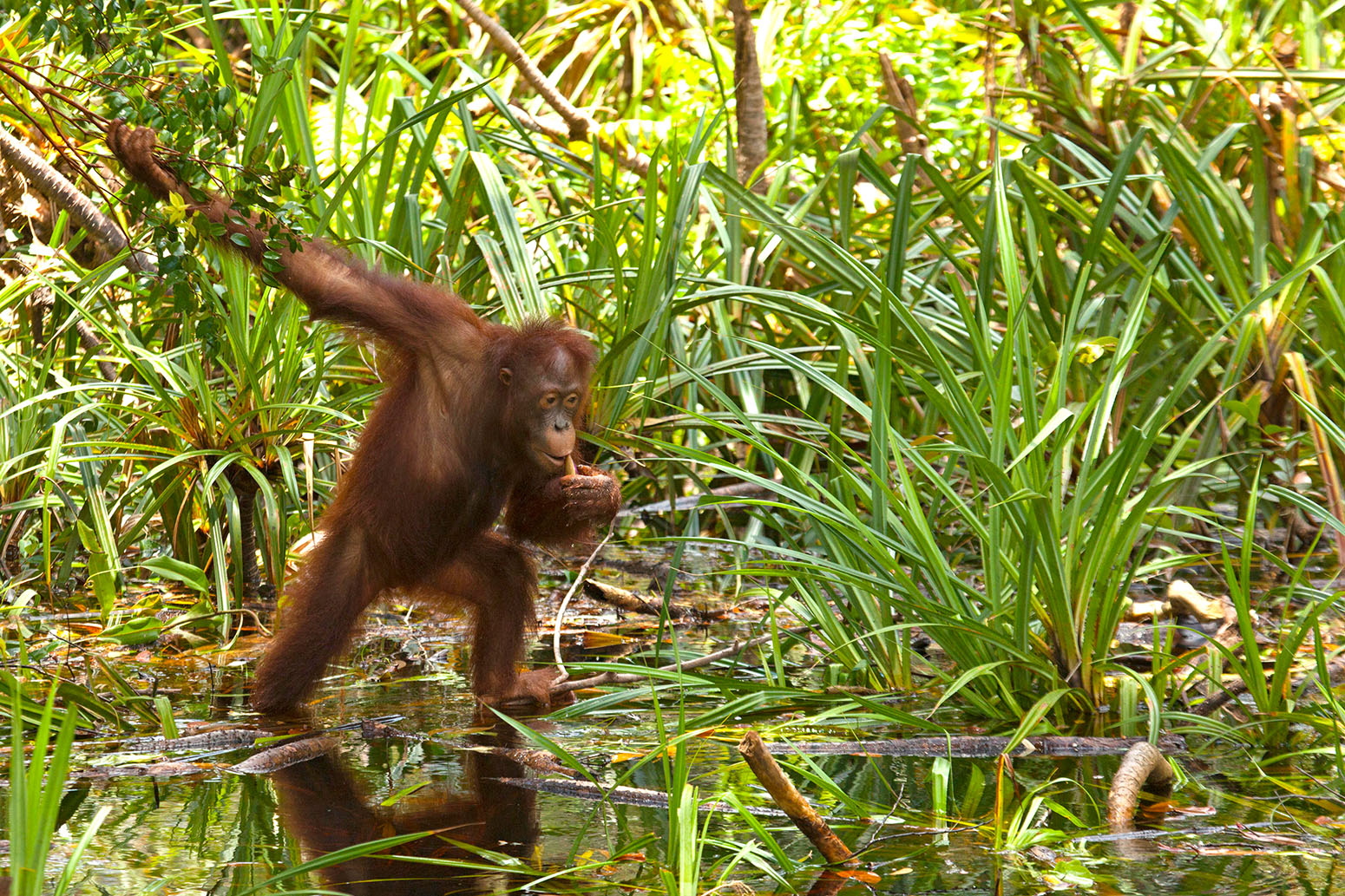

Glossary
El Niño: Every five years or so, a change in the winds causes a shift to warmer than normal sea surface temperatures in the equatorial Pacific Ocean – known as El Niño. Together with… Read More
Coal
Indonesia is the world’s fifth largest producer of coal and is home to the world’s 10th largest coal reserves, according to the latest BP Statistical Review of World Energy. Around 80% of Indonesia’s coal is exported, according to the International Energy Agency (IEA). From 2000 to 2014, Indonesia’s coal exports quadrupled, Carbon Brief analysis shows. In 2017, Indonesia overtook Australia to become the world’s largest exporter of thermal coal, which is used for power generation, according to the IEA. China is the primary buyer of Indonesian coal and received 31% of its exports in 2017, says the IEA. Other key customers include India, Japan and South Korea. Coal mining has many environmental impacts in Indonesia. For example, the shipping of mined coal from Kalimantan has destroyed “hundreds of square metres” of tropical coral reefs, according to Greenpeace. Around 58% of Indonesia’s electricity was generated by coal in 2017. This is shown on the chart below (black area). Chart by Carbon Brief using Highcharts The country ranks 10th in the world for total coal capacity (29,307 megawatts), but fifth for planned capacity (24,691MW). However, it is worth noting that Indonesia has repeatedly scaled back its planned coal capacity. In 2015, Indonesia had plans for 45,000MW of new coal. This figure later fell to 34,000MW in 2018 and again to around 25,000MW this year, according to data from Global Energy Monitor. In its latest report on the global coal market, the IEA identifies Indonesia as a major driver of rising demand over the next five years. It says demand for coal-fired power in the country is likely to increase as a result of “robust economic growth, a rising population and an expanding middle class”. In 2015, Widodo unveiled an ambitious plan to develop 35,000MW of new power by 2019 – in part to address the “electrification gap” between the country’s wealthy islands, such as Bali, Java and Sumatra, and its smaller, more isolated islands. (The target was later pushed back to 2024.) Interactive map of historical and planned coal power plants in Indonesia and South East Asia The government sees coal-fired power as a “cheap and easy” way to help meet its target, according to the Financial Times. (However, analysis by Carbon Tracker found it could become cheaper to build new renewables than new coal between 2020 and 2022, with new renewables becoming cheaper than existing coal by 2028.) In March 2018, officials capped the price of domestic coal for power stations for two years – a move intended to help keep electricity prices low around the time of this year’s election, analysts say. Coal has not been a major talking point in Widodo’s campaign for reelection, according to Mongabay. However, his rival Prabowo has called for coal use to be slashed and replaced with renewables, according to the Jakarta Post.Renewables
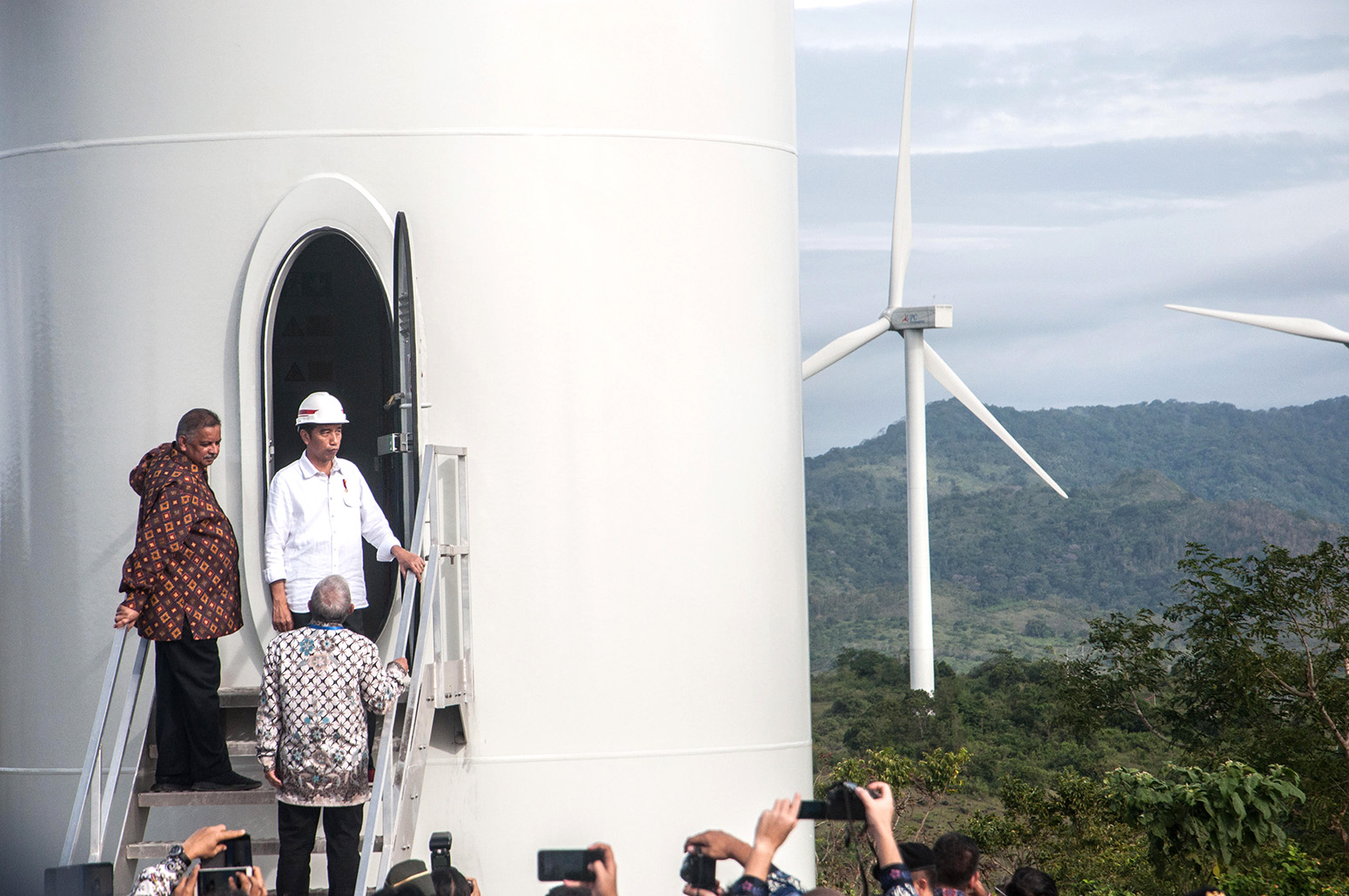
Just 5% of Indonesia’s electricity came from renewables in 2017 – the vast majority of this from geothermal sources. However, the government has pledged to source 23% of its energy from renewables by 2025 and 31% by 2050. Indonesia is the world’s second largest producer of geothermal power after the US. The country has installed 1,925MW of geothermal power. However, its untapped geothermal resources are estimated to total 29,000MW – 40% of the world’s total geothermal reserves.
Climate laws
Indonesia’s legal system is based on Roman-Dutch law, custom and Islamic law. A wide range of legislation is produced and exists in a hierarchy. This hierarchy is as follows (in order of importance): the 1945 constitution; MPR resolution; law; government regulation substituting a law; government regulation; presidential decree; regional regulation. Much of Indonesia’s climate-related legislation is directed towards tackling emissions from the forest sector. Such laws, discussed in more detail above, include moratoriums on the draining of peatlands and the conversion of primary rainforest. In September 2018, Widodo issued a presidential decree to place a moratorium on new permits for palm plantations for three years. The energy sector is also subject to climate-related regulations. The government issued a regulation in 2014 which contained a pledge to source 23% of its power from renewables by 2025 and 31% by 2050 – up from 5% today. Indonesia has targets to improve energy efficiency. Its National Master Plan for Energy Conservation (RIKEN) sets a goal of decreasing energy intensity by 1% annually until 2025. In October 2017, the government announced a new initiative aimed at incorporating climate action into the country’s development agenda. (The country has four separate five-year development plans spanning the period 2005-2025). The country’s National Medium Term Development Plan for 2015-19 says that a “green economy” should be at the foundation of Indonesia’s development. This plan targets the eradication of illegal logging, fishing and mining and increased participation of local people in forest management. It also sets out aims to increase vulnerable communities’ resilience to climate change impacts. It specifically targets emissions cuts from five “priority sectors”, including forestry and peatlands, agriculture, energy and transportation, industrial and waste. On 25 March 2019, the government launched a report looking at how climate action can be incorporated into the country’s development plan for 2020-25. The report finds that a “low carbon” development pathway could drive a GDP growth rate of 6% a year until 2045, higher than the rate expected under a “business-as-usual” pathway. This path could also cut emissions by 43% by 2030, when compared to “business-as-usual” – exceeding the country’s current national climate targets.Climate finance
Indonesia has pledged to cut its emissions by 29-41% by 2030, in comparison to “business as usual” – but the top end of this pledge is conditional on “support from international cooperation”. The pledge did not, however, specify how much aid it would need to reach the upper end of its target. A separate government document published at the time reported that meeting the country’s renewable energy target alone would cost $108bn. Indonesia is a major emerging market economy, but its population faces steep financial inequality. A report by Oxfam in 2017 found Indonesia’s four richest men now have more wealth than 100 million of the country’s poorest people. Analysis by Carbon Brief suggests that Indonesia is the world’s sixth largest recipient of climate finance, having received an average of $952m a year from 2015-16. Further Carbon Brief analysis shows that, by 2016, Indonesia had been awarded $362m in investment from the Green Climate Fund (GCF) and the Climate Investments Fund (CIF). Notable schemes financed by the multilateral climate funds include a $150m project to develop private sector geothermal energy and $18m for a community-led project to tackle forest degradation.Impacts and adaptation
As a highly populous nation spread across a chain of tropical islands, Indonesia is considered to be highly vulnerable to the impacts of climate change. Sea level rise threatens the 42 million people who live less than 10m above sea level in Indonesia. A one-metre rise in sea levels could inundate 405,000 hectares of Indonesia’s coastal land and cause low-lying islands to disappear. The country’s capital, Jakarta – which is home to 10 million people – is acutely threatened by sea level rise and has been described as the “fastest sinking city” on Earth. The threat of sea level rise has been compounded in the city by illegal well digging, which is causing the ground to plummet.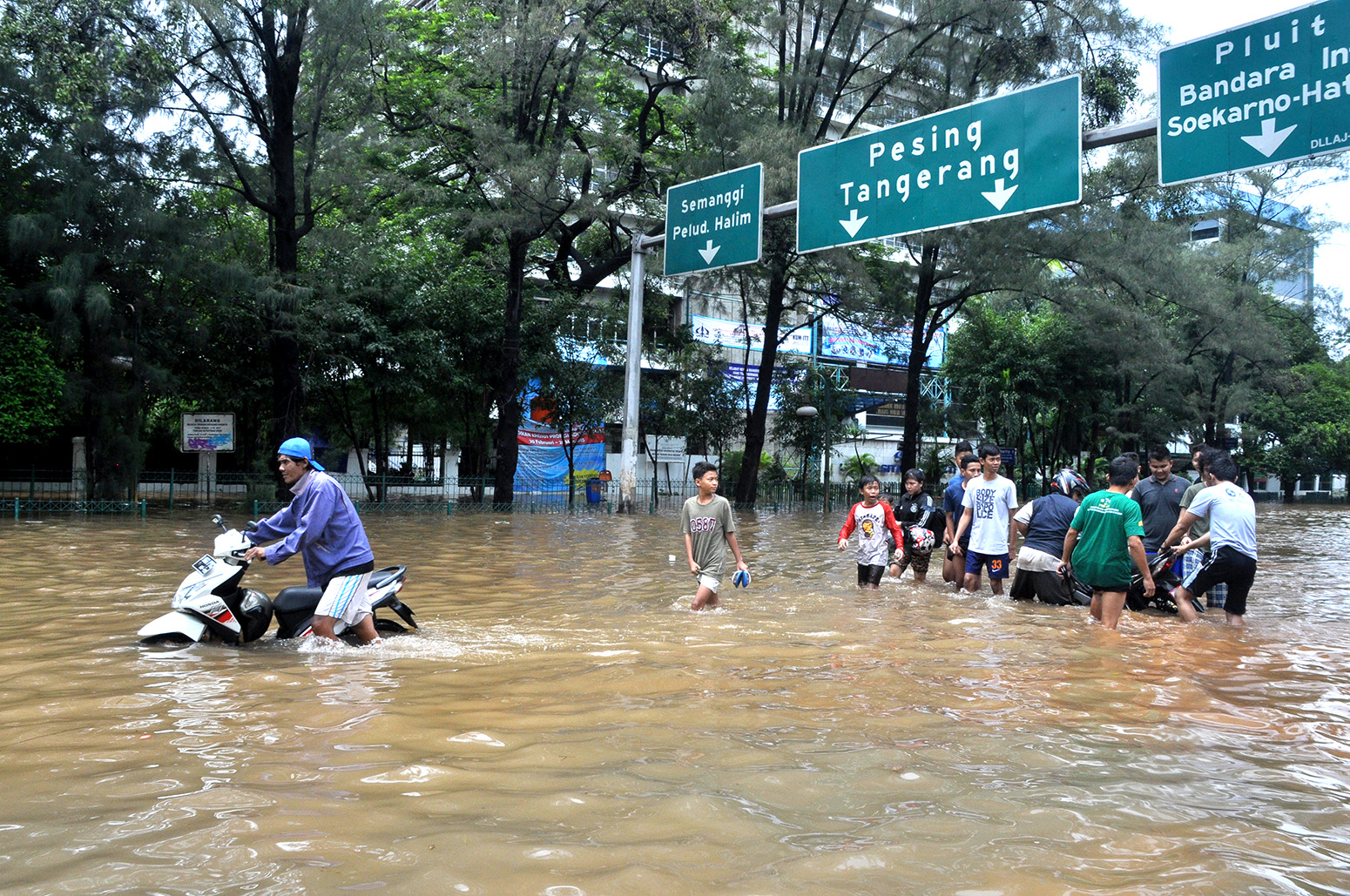
“As the largest archipelago nation in the world, Indonesia is one of the countries that are most vulnerable to climate change.”
The report outlines a plan to improve Indonesia’s resilience to climate change, namely by taking measures to improve energy and food security and to boost the resilience of its forest ecosystems. The report also identifies small islands, coastal regions and cities as “special areas” that most require stronger adaptation measures.Article information
Infographic by Tom Prater