
Shrinking of forest carbon sink under climate change may be ‘less than anticipated’
Respiration
We all know from our school days that plants use sunlight, water and CO2 during photosynthesis in order to grow. Photosynthesis produces glucose and oxygen. But to release that glucose as energy to fuel growth, plant cells need to respire. Respiration uses oxygen and produces CO2 along with energy and water. So, put another way, plants both absorb and produce CO2. Fortunately, the amount of CO2 that plants produce during respiration is only around half what they absorb during photosynthesis. So overall, plants and trees help soak up CO2 from the atmosphere – helping offset part of what humans are adding by burning fossil fuels. However, previous research shows that plants respire more in warmer temperatures. Scientists are concerned that if plant respiration rates speed up under climate change, plants and forests might start to kick out more CO2, thus warming the planet even more. Given the number of plants on Earth, this is potentially a big deal, explained lead author Prof Peter Reich, from the Department of Forest Resources at the University of Minnesota, during a press briefing:“Plant respiration returns six times as much CO2 to the atmosphere every year as fossil fuel burning. So even a small increase in this would be big relative to fossil fuel emissions.”
Plants can acclimatise to higher temperatures, says Reich, limiting this increase in CO2 release. But until now, scientists didn’t really know how well plants and trees would adapt.
To find out, Reich and his colleagues carried out a unique, open-air experiment over five years using 10 common tree species in North America.
The results suggest tree respiration increases by around 5% in a climate that is 3.4C warmer. This is less than half the increase in respiration reported by other studies, and less than the 23% the researchers expected had the trees not adapted to the higher temperatures.
‘Less than anticipated’
In general, the study’s findings are good news, says Reich:“[The results] suggest that the increases in respiration rates for terrestrial plants – and the associated increase in atmospheric CO2 concentration, which results in global warming – may be much less than anticipated.”
In other words, the way plants adapt to rising temperatures means they’ll contribution less to further warming than scientists had expected.
But that’s not to say that tree respiration changes are going to help limit climate change, adds Reich, they’re just not likely to accelerate it as much as previously thought:
“Unfortunately, the problem we’ve created in the first place with our greenhouse gas emissions still exists. So we still very much need to cut our greenhouse gas emissions to stop climate change.”
Prof Pete Smith, professor of soils & global change at the University of Aberdeen, who wasn’t involved in the study, agrees. He tells Carbon Brief:
“We should not interpret these results as a license to allow further warming – we still need to be wary of feedbacks and limit warming in line with our collective targets under the Paris Agreement.”
“My cautious recommendation would be not to take this study as a demonstration that global warming will not induce carbon loss from ecosystems.”
Forest plots
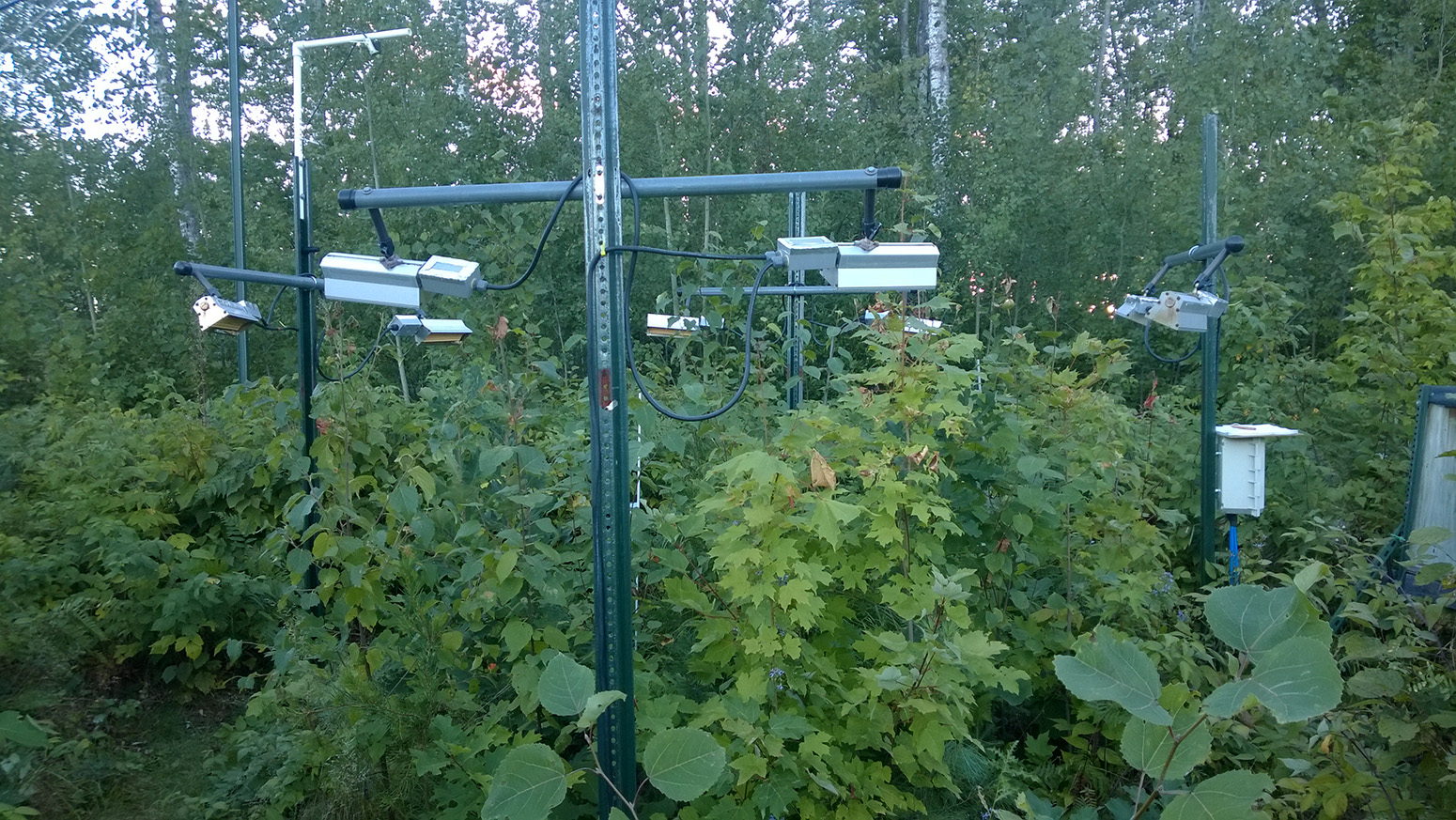
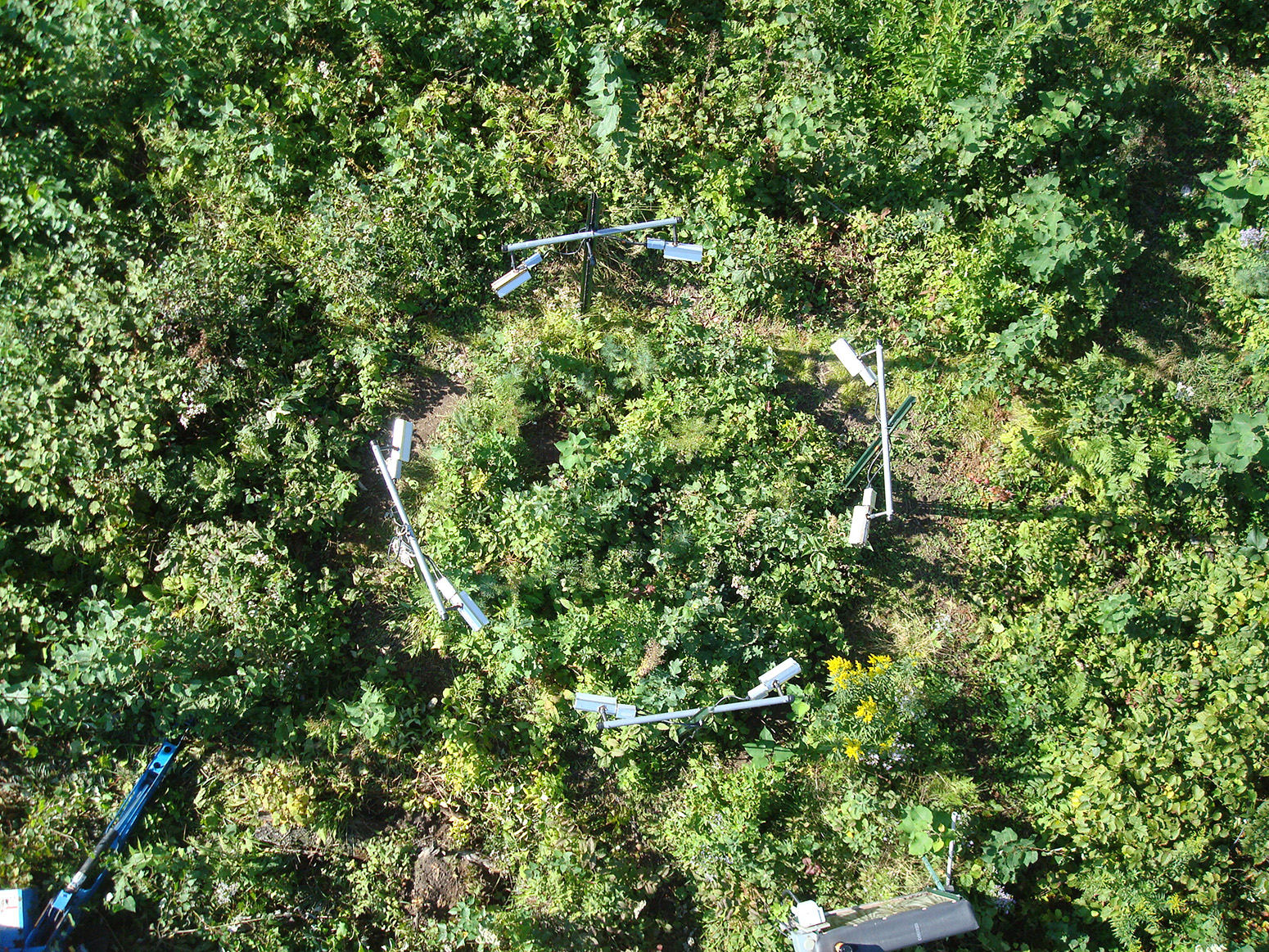
How the researchers conducted their experiment is an interesting topic in itself. While similar research has mostly been carried out through laboratory testing, the researchers of the new study set up their experiments outdoors in a forest in Minnesota. To regulate the temperature at 3.4C higher than the surroundings, the researchers used heat lamps – a bit like the patio heaters that keep you warm during a chilly evening in a pub beer garden. They chose 3.4C to reflect likely warming in North America in 60-80 years’ time, Reich tells Carbon Brief. The researchers arranged the heat lamps around 48 different plots of tree saplings, and dug heated cables into the ground to warm up the soil the plants were growing in. Other than being kept warm, the trees were in a natural habitat, exposed to wind, rain, insects and animals as they would be in any normal forest. The lamps and cables were all hooked into a computer system that maintained the warmer conditions whatever the weather.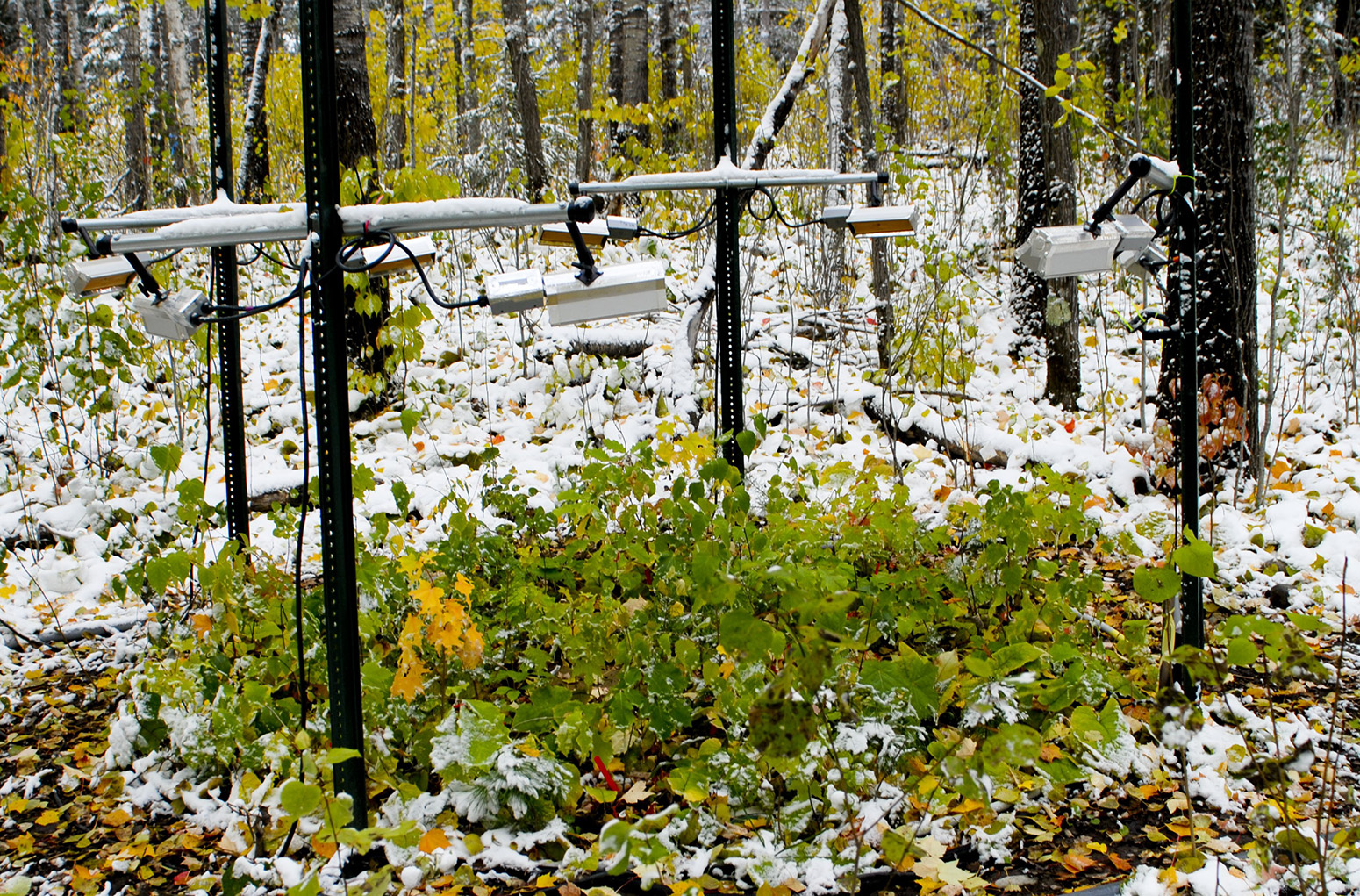
Main image: Field of trees during fall foliage, Stowe Vermont, USA. Credit: DonLand/Shutterstock.
Article information
Reich et al. (2016) Boreal and temperate trees show strong acclimation of respiration to warming, Nature, doi:10.1038/nature17142.